Many devotees feel confused when planning a visit to the temple in the early morning hours. Balkampet Yellamma Temple Timings often create confusion for visitors searching for an accurate darshan schedule online daily. People also search Balkampet Temple timings and Balkampet Yellamma Temple Timings Today before planning visits. Even Saundatti Yellamma Temple Timings and Yellamma Temple Balkampet timings add to visitor confusion overall.
This blog explains everything you need to know about Balkampet Yellamma Temple Timings in a simple, detailed guide. You will learn Balkampet Temple timings and Balkampet Yellamma Temple Timings Today clearly explained here. Comparisons with Saundatti Yellamma Temple Timings and Yellamma Temple Balkampet timings are also included in the section. You will find the best visiting tips, rituals, and darshan guidance for a smooth experience journey.
The Essence of Goddess Yellamma Devi
Goddess Yellamma Devi holds a deep place in the hearts of devotees. She is widely worshipped as a powerful form of Goddess Shakti. People believe her blessings bring protection, strength, and emotional healing. Her worship is especially popular in South India, including Telangana and Karnataka. Many devotees visit her temples seeking peace and relief from life struggles.
Devotees understand the essence of Goddess Yellamma Devi through her spiritual significance and their devotion. They see her as a representation of faith, surrender, and divine feminine energy. Ancient traditions and local beliefs root her stories, and temples dedicated to her attract thousands of pilgrims every year. Devotees regard her as a mother figure who listens to every sincere prayer.
- Goddess Yellamma Devi is a form of divine Shakti energy.
- Devotees in South India mainly worship her.
- Devotees believe she grants protection and healing.
- She is seen as a compassionate mother goddess.
- Devotees link her worship with ancient traditions and folklore.
- Many temples dedicated to her attract large crowds.
- She symbolizes faith, strength, and spiritual surrender.
A Spiritual Beacon in Hyderabad
A Spiritual Beacon in Hyderabad is the Balkampet Yellamma Temple, known for its deep devotion and strong faith among devotees. People visit this sacred place seeking blessings, peace, and healing. The temple stands as a powerful symbol of Goddess Shakti worship, attracting thousands of pilgrims across Hyderabad every day.
A Place of Faith and Healing
A Place of Faith and Healing, the Balkampet Yellamma Temple is believed to restore hope and strength in devotees’ lives. People come here with prayers for health, peace, and relief from struggles. The sacred atmosphere and strong devotion make it a trusted spiritual center where faith turns into emotional and spiritual healing.
The Spiritual Magnet of Hyderabad
The Spiritual Magnet of Hyderabad is the Balkampet Yellamma Temple, drawing devotees from all over the city and beyond. People visit to seek blessings, guidance, and inner peace. Devotees regard it as a powerful center of devotion because of its strong spiritual energy and deep-rooted faith, and they offer countless prayers there every single day.
History and Legends of Balkampet Yellamma Temple
Devotion and faith in Goddess Yellamma Devi deeply connect the history and legends of Balkampet Yellamma Temple. Locals believe that the temple has existed for centuries and that it serves as a sacred space for prayers and healing. Generations pass down its spiritual stories, and devotees keep these traditions alive in Hyderabad by following the temple timings for their daily visits.
According to legends, the History and Legends of Balkampet Yellamma Temple speak of divine miracles and protection offered by the goddess. Devotees believe she fulfills sincere wishes and removes hardships. Over time, the temple became a major pilgrimage site where people gather to experience faith, blessings, and spiritual comfort.
The Legend of Goddess Yellamma (Renuka Devi)
The Legend of Goddess Yellamma (Renuka Devi) tells of sacrifice, faith, and devotion. She is linked with Lord Parashurama. Devotees believe she blesses sincere prayers and inspires strength, courage, and spiritual connection among millions of followers.
How the Temple Originated in Balkampet
How the Temple Originated in Balkampet began as a small shrine of Goddess Yellamma Devi. Faith, miracles, and community devotion grew over time. It developed into a major Hyderabad spiritual center, now standing as a powerful place of worship.
Connection to Other Yellamma Temples in South India
The Connection to Other Yellamma Temples in South India shows Goddess Yellamma Devi is widely worshipped across the region. Each temple has unique traditions but shares the same divine energy and faith. Balkampet Yellamma Temple is an important link in this spiritual network. Visiting multiple temples strengthens devotion, uniting people through shared rituals and cultural heritage.
| Temple Location | State | Significance |
| Saundatti | Karnataka | Considered the original and most sacred Yellamma Peetham |
| Badami | Karnataka | Known for ancient cave worship and Shakti traditions |
| Yellampally | Andhra Pradesh | Famous for traditional Renuka Devi rituals |
| Basavakalyan | Karnataka | Recognized as a strong Shakti worship center |
| Balkampet | Telangana | Major urban temple and highly visited pilgrimage site |
| Kolhapur Mahalakshmi link shrines | Maharashtra | Connected spiritually through Shakti worship traditions |
Historical Importance in Hyderabad’s Culture
Balkampet Yellamma Temple plays a key role in linking historical importance with Hyderabad’s culture. It has shaped devotional identity, unity, and tradition for generations. The temple reflects Hyderabad’s rich spiritual heritage and continues to inspire faith, rituals, and cultural connections among devotees.
Spiritual Belief and Legacy
The Spiritual Belief and Legacy of Balkampet Yellamma Temple reflects deep faith in Goddess Yellamma. Devotees believe she brings peace, protection, and healing. This lasting devotion continues through generations, strengthening spiritual energy and hope among families in Hyderabad.
Deity and Spiritual Significance of Balkampet Yellamma Temple
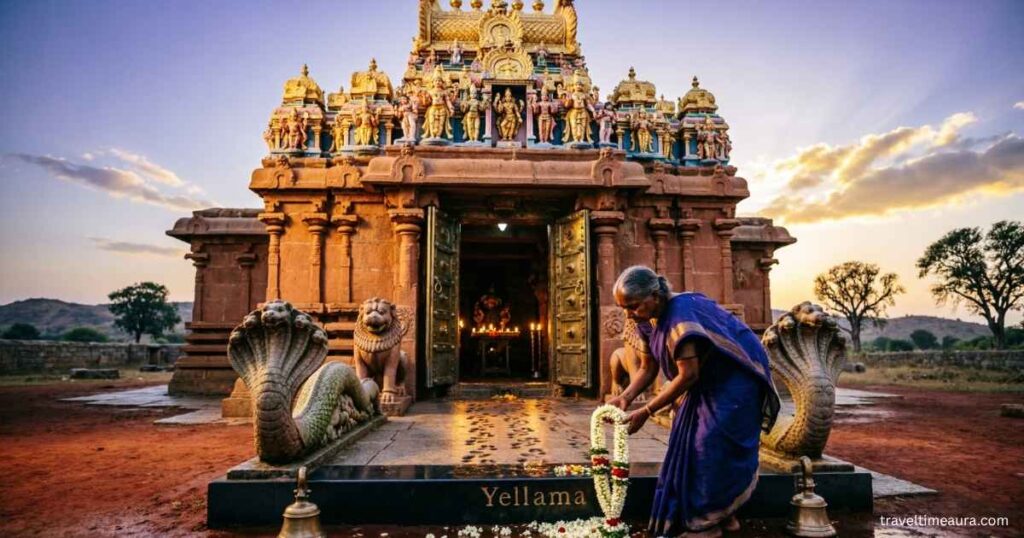
Devotees at Balkampet Yellamma Temple center the temple’s spiritual significance on Goddess Yellamma Devi, a powerful form of Shakti. Devotees believe she protects them from hardships and grants strength in difficult times. Her divine presence makes the temple a sacred space where faith and devotion grow stronger every day, along with Balkampet Yellamma Temple Timings guiding worship.
The Deity and Spiritual Significance of Balkampet Yellamma Temple also reflect deep cultural beliefs in Hyderabad. People visit to seek healing, peace, and blessings for their families. The goddess is worshipped with great devotion through daily rituals. Her spiritual energy inspires hope and strengthens the bond between devotees and faith.
Who is Goddess Yellamma?
Devotees across South India worship Goddess Yellamma as a powerful form of Goddess Shakti with deep devotion. They also know her as Renuka Devi and believe she protects her devotees from harm. People see her as a mother figure who listens to prayers and guides them through life struggles.
- Goddess Yellamma is a form of Goddess Shakti.
- Devotees also know her as Renuka Devi.
- Devotees worship her for protection and strength.
- She is seen as a compassionate mother goddess.
- Her worship is popular in South India.
- Devotees link her with ancient Hindu legends.
- People believe she fulfills sincere prayers.
The Idol of Goddess Yellamma at Balkampet
Devotees who visit Balkampet Yellamma Temple daily deeply revere the idol of Goddess Yellamma at Balkampet. They believe the idol radiates strong spiritual energy and divine blessings. People come here with faith, seeking peace, healing, and protection. The idol holds great religious importance in Hyderabad’s spiritual landscape.
- The idol represents Goddess Yellamma Devi in divine form.
- Devotees consider it spiritually powerful and sacred.
- Devotees believe it grants blessings and protection.
- The idol is central to daily temple rituals.
- It attracts thousands of visitors every day.
The Holy Water (Tirtham)
Devotees at Balkampet Yellamma Temple consider the Holy Water (Tirtham) highly sacred. They believe it carries the divine blessings of Goddess Yellamma Devi. People take this holy water after prayers, trusting it brings healing, peace, and protection in their lives and removes negative energies.
- Tirtham is sacred holy water from the temple.
- Devotees believe it carries the blessings of Goddess Yellamma.
- Devotees use it for healing and spiritual protection.
- It is distributed after special prayers and rituals.
- Many believe it removes negativity and brings peace.
Symbolism of Yellamma Worship
The Symbolism of Yellamma Worship reflects deep faith in Goddess Shakti and her protective energy. Devotees see her as a symbol of strength, compassion, and healing. Her worship represents surrender to divine power and trust in higher guidance during life’s struggles and emotional challenges.
- Symbolizes divine feminine energy and Shakti.
- Represents strength, faith, and protection.
- Connected with healing and emotional balance.
- Encourages surrender and devotion to the goddess.
- Reflects cultural and spiritual traditions of South India.
Temple Timings and Darshan Schedule of Balkampet Yellamma Temple
Temple Timings and Darshan Schedule of Balkampet Yellamma Temple follow a simple daily routine for devotees. The temple usually opens early in the morning for Suprabhata Seva and closes after evening rituals. People visit throughout the day to offer prayers and experience the peaceful darshan of Goddess Yellamma Devi.
Temple Timings and Darshan Schedule of Balkampet Yellamma Temple may vary on special days and festivals. Tuesdays and Fridays usually see heavy crowds due to strong devotion. Devotees prefer early morning or late evening hours for a smoother visit. Proper timing helps avoid rush and ensures a calm spiritual experience.
Daily Temple Timings
The Daily Temple Timings of Balkampet Yellamma Temple follow a simple and disciplined schedule for devotees. The temple opens early in the morning for prayers and closes after evening rituals. Visitors can plan their darshan accordingly to experience a peaceful visit without much rush or waiting time throughout the day.
| Session | Opening Time | Closing Time |
| Morning Session | 5:00 AM | 12:30 PM |
| Evening Session | 4:00 PM | 8:00 PM |
Balkampet Yellamma Temple Tuesday Timings
Devotees at Balkampet Yellamma Temple consider Tuesdays highly sacred to Goddess Yellamma Devi, so they visit the temple in large numbers on this day. The temple experiences a huge rush as devotees come to seek blessings. Temple authorities conduct special rituals and extend darshan hours to manage the crowd smoothly.
- Devotees consider Tuesdays highly auspicious for worshipping Yellamma Devi.
- The temple opens early in the morning for special darshan.
- Heavy crowds are expected throughout the day.
- Devotees perform special prayers and offerings on Tuesdays.
- Darshan timing may be extended due to the rush.
- Early morning visits are best to avoid long queues.
- Many believe wishes are fulfilled on Tuesday worship.
Balkampet Yellamma Temple Sunday Timings
Balkampet Yellamma Temple Timings on Sunday attract a large number of devotees as Sundays are a convenient day for family visits. The temple follows its regular schedule but experiences heavy crowds during morning and evening hours. Devotees prefer early visits to enjoy the peaceful darshan of Goddess Yellamma Devi.
- Sundays follow regular temple opening and closing hours.
- Morning hours are usually less crowded.
- Afternoon and evening see a higher visitor rush.
- Devotees often visit with family on Sundays.
- Early darshan is recommended for a calm experience.
Morning Rituals (Suprabhata Seva and Alankarana)
Morning Rituals (Suprabhata Seva and Alankarana) at Balkampet Yellamma Temple begin the day with devotion and sacred energy. The Suprabhata Seva wakes the deity with prayers and hymns. Devotees believe this early ritual brings divine blessings and sets a peaceful tone for the entire day.
- Suprabhata Seva is the early morning awakening ritual.
- Alankarana involves decorating the goddess with flowers and ornaments.
- Both rituals are performed with deep devotion.
- Priests chant hymns during the ceremonies.
- Devotees believe it brings blessings and positivity.
Daily Pooja Schedule
The Daily Pooja Schedule of Balkampet Yellamma Temple follows a well-organized routine that guides all worship activities. Each ritual is performed with devotion and traditional chants. Devotees attend these poojas to experience divine blessings and a peaceful spiritual atmosphere throughout the day, in line with the Balkampet Yellamma Temple Timings.
The Daily Pooja Schedule of Balkampet Yellamma Temple begins early morning and continues till evening. Each session has a specific purpose, from awakening the goddess to offering prayers and aarti. The schedule helps maintain discipline and allows devotees to plan their darshan comfortably without confusion or delay.
| Time | Seva / Ritual | Purpose |
| 5:00 AM | Suprabhata Seva | Awakening the Goddess with prayers |
| 6:00 AM | Abhishekam | Sacred bath with holy materials |
| 7:00 AM – 9:00 AM | Alankarana and Archana | Decoration and flower offerings |
| 9:00 AM – 12:00 PM | General Darshan & Poojas | Devotee prayers and worship |
| 12:00 PM | Noon Aarti and Naivedyam | Food offering and midday aarti |
| 12:30 PM | Temple Break | Temporary closure for rest |
| 4:00 PM | Evening Darshan Opens | Temple reopens for devotees |
| 6:00 PM | Special Archana | Evening special prayers |
| 6:30 PM | Maha Mangala Aarti | Grand evening aarti ritual |
| 8:00 PM | Temple Closing Rituals | Final prayers and closure |
Aarti Timings
Aarti Timings at Balkampet Yellamma Temple are an important part of daily worship. Devotees gather to witness these sacred rituals and feel the divine presence of Goddess Yellamma Devi. Each aarti creates a peaceful and devotional atmosphere inside the temple.
- Morning Aarti: 6:30 AM
- Noon Aarti: 12:00 PM
- Maha Mangala Aarti (Evening Aarti): 6:30 PM
Balkampet Yellamma Temple Timings During Navratri
The temple authorities extend the timings at Balkampet Yellamma Temple during Navratri to accommodate large crowds of devotees who visit for special prayers, rituals, and daily festive celebrations dedicated to Goddess Yellamma Devi.
Key Points:
- Temple opens earlier than regular days during Navratri.
- Closing hours are extended due to heavy devotee rush.
- Special poojas and daily rituals are performed.
- Morning and evening aartis attract huge crowds.
- Devotees offer flowers, coconuts, and prayers.
- Continuous darshan is arranged for pilgrims.
- Festive spiritual atmosphere throughout the Navratri days.
Special Sevas and Booking Information
Special Sevas and Booking Information at Balkampet Yellamma Temple help devotees participate in important rituals with ease. These sevas are arranged to offer a more personal and spiritual experience. Devotees can book in advance through official counters or authorized portals to avoid the rush and ensure a smooth participation.
| Seva Name | Purpose |
| Abhishekam Seva | Sacred bathing ritual of the goddess |
| Kumkumarchana Seva | Offering kumkum with chants |
| Alankarana Seva | Decorating the deity with flowers |
| Yellamma Kalyanam Seva | Divine marriage ceremony ritual |
| Annadanam Donation | Offering food to devotees |
Best Time for Darshan
The best time for Darshan at Balkampet Yellamma Temple is usually early morning or late evening when the crowd is lighter, and the atmosphere feels more peaceful and devotional for visitors.
- Early morning is best for a peaceful darshan.
- Weekdays have fewer crowds compared to weekends.
- Tuesday and Friday mornings are spiritually significant.
- Evening aarti time offers a powerful devotional experience.
Major Festivals Celebrated at Balkampet Yellamma Temple
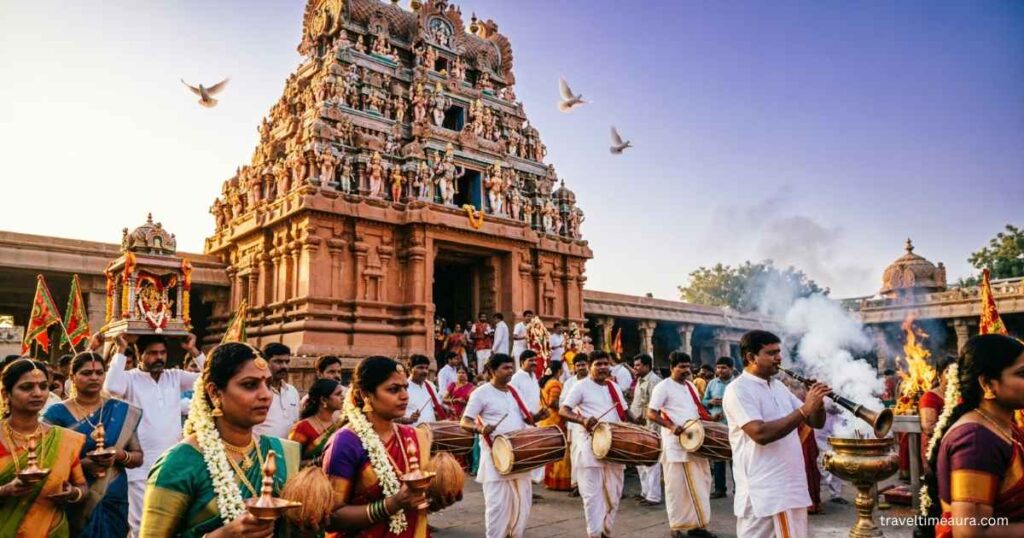
If you think temples are quiet all year round, Balkampet Yellamma Temple will quickly change your mind. The moment a festival arrives, the entire space transforms into a vibrant sea of devotion, chants, and colour. It doesn’t feel like a routine visit anymore—it feels like stepping into a living celebration of faith, all around Balkampet Yellamma Temple Timings.
Major festivals celebrated here are not just religious events. They are emotional gatherings where families, devotees, and even first-time visitors come together. The air fills with incense, drum beats, and the powerful energy of Goddess Yellamma Devi worship. Each festival carries its own story, rhythm, and spiritual meaning that stays with you long after you leave.
Yellamma Kalyanam – The Divine Wedding Celebration
Yellamma Kalyanam is a sacred ritual celebrating the divine marriage of Goddess Yellamma Devi. Devotees attend for blessings, harmony, and family well-being, experiencing a deeply traditional and spiritual atmosphere.
Bonalu Festival – The Spirit of Telangana Devotion
Bonalu fills the temple with vibrant energy and devotion. Women carry decorated pots, sing songs, and dance to drum beats. Devotees express gratitude, making the festival deeply emotional, powerful, and personal.
Navaratri Celebrations – Nine Nights of Divine Energy
Navaratri fills the temple with nine days of prayers and rituals. Each day honors a form of Goddess Shakti. Crowds gather, aartis glow, and the atmosphere feels vibrant, alive, and deeply spiritual.
Shankranti and Ugadi – Seasonal Devotion and Fresh Beginnings
Shankranti and Ugadi bring calm celebrations focused on gratitude and new beginnings. Devotees offer flowers and prayers, seek blessings, and enjoy a peaceful, less crowded atmosphere for reflection and spiritual connection.
Pournami (Full Moon Day) Abhishekams – Lunar Devotion Rituals
Full moon days are special at the temple. Pournami Abhishekams use holy water, milk, and chants. Devotees feel strong spiritual energy, calmness, and peace during these quiet, powerful nights.
Poojas, Sevas, and Rituals at Balkampet Yellamma Temple
The temple follows a disciplined ritual schedule each day:
- Suprabhata Seva (5:00 AM): Awakening the Goddess with Vedic chants
- Abhishekam (6:00 AM to 7:30 AM): Sacred bath for spiritual cleansing
- Alankarana Seva (8:00 AM): Floral and silk decoration of the deity
- Kumkumarchana (9:00 AM to 12:00 PM): 108 names of Yellamma recited with kumkum offerings
- Naivedyam and Maha Mangala Aarti (12:00 PM): Food offering and noon aarti
- Evening Maha Aarti (6:30 PM): Camphor lamps waved before the Goddess
Route Map and How to Reach Balkampet Yellamma Temple
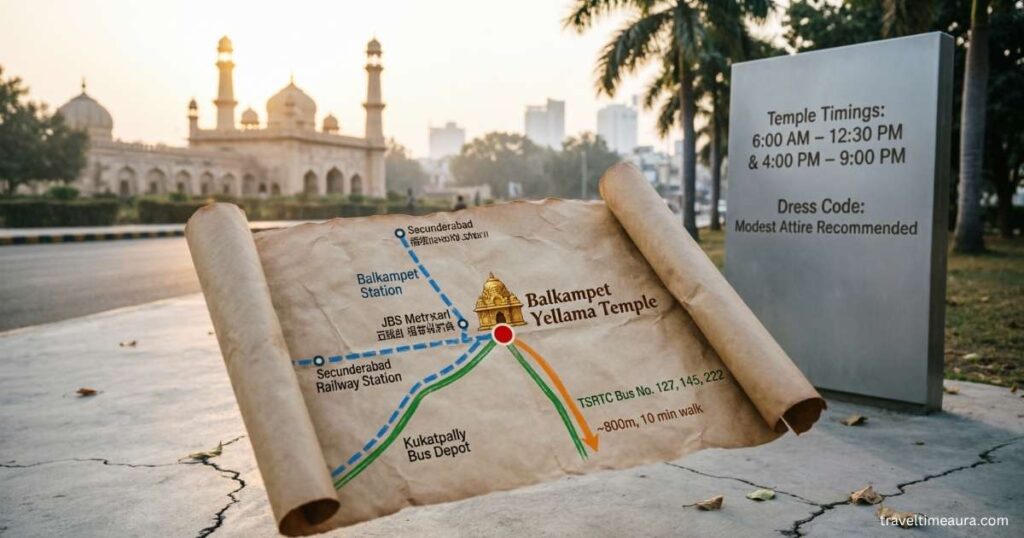
Finding your way to Balkampet Yellamma Temple is easier than you might expect. Even if it’s your first visit to Hyderabad, the journey feels smooth and well-connected. Think of it like heading to a familiar neighborhood temple—simple, direct, and surprisingly convenient once you know the route.
The temple is located near SR Nagar, a busy and well-known area in the city. Because of this central location, reaching it by metro, bus, or car is quite आसान. Whether you’re coming from Secunderabad, Ameerpet, or another part of Hyderabad, you’ll find multiple travel options that fit your comfort and budget.
🚇 By Metro (Most Convenient Option)
If you want the easiest route, the Hyderabad Metro is your best bet.
The nearest station is SR Nagar Metro Station, which is just a short walk or quick auto ride away.
- The metro saves you from traffic stress, especially during peak hours.
- From Ameerpet (a major interchange), it’s only one stop away.
- Many devotees prefer this option during festivals when roads get crowded.
- Once you exit, you’ll find autos and signboards guiding you toward the temple.
🚌 By Bus (Budget-Friendly Travel)
City buses frequently run to the Balkampet and SR Nagar area.
- TSRTC buses connect major parts of Hyderabad to this location.
- You can ask for stops like “Balkampet” or “SR Nagar” for easy drop-off.
- This is a great option if you’re traveling from older parts of the city.
- During festival days, buses may get crowded, so plan your timing wisely.
🚗 By Car or Auto (Flexible and Direct)
If you prefer comfort, taking a cab, auto, or your own vehicle works well.
- You can simply search “Balkampet Yellamma Temple” on maps for exact directions.
- Roads are well-connected, but traffic can be heavy during peak hours.
- Parking is available nearby, though it may fill up quickly on Tuesdays and Fridays.
- Autos are easily available from nearby areas like Ameerpet and Punjagutta.
You may also like this: Dakshineswar Temple Timing: Open or Closed Today?
Frequently Asked Questions
When should I check Balkampet Yellamma Temple Timings before visiting?
It is best to check the schedule a day before your visit. Timings may change during festivals, special poojas, or crowded days like Tuesdays and Fridays.
How do Balkampet Yellamma Temple Timings change on Tuesdays?
Tuesdays are considered highly auspicious for the goddess. The temple usually opens earlier and may remain open longer due to heavy devotee rush.
Are Balkampet Yellamma Temple Timings different on Sundays?
Sundays follow regular hours but attract more families and visitors. Morning and evening hours are usually crowded, so early visits are more peaceful.
Do Balkampet Yellamma Temple Timings vary during festivals?
Yes, temple authorities extend the timings during major festivals like Bonalu and Navaratri. They arrange special rituals and continuous darshan for large numbers of devotees.
Can Balkampet Yellamma Temple Timings affect the darshan waiting time?
Yes, visiting during peak hours can increase waiting time significantly. Early morning or late evening visits usually offer a quicker and more comfortable darshan experience.
Conclusion
Planning your visit becomes simple when you clearly understand Balkampet Yellamma Temple Timings. Many devotees search for Balkampet Yellamma Temple timings to avoid confusion and long waiting hours. Knowing Balkampet temple timings helps you choose the best time for a peaceful darshan. You can also check Balkampet Yellamma Temple Timings Today before leaving home. This helps you stay updated, especially during festivals or special pooja days. Comparing Saundatti Yellamma Temple Timings also gives better clarity about regional traditions and schedules. Understanding Yellamma Temple Balkampet timings ensures a smooth and stress-free temple visit experience.
Balkampet Yellamma Temple Timings play an important role in planning your spiritual journey. When you follow Balkampet temple timings, you can avoid heavy crowds and enjoy calm darshan. Checking Balkampet Yellamma Temple Timings Today helps you stay prepared for any schedule changes. Many devotees rely on accurate Balkampet Yellamma Temple timings before visiting. Even comparing the Saundatti Yellamma Temple Timings can give helpful insights. Overall, knowing Yellamma Temple Balkampet timings makes your visit peaceful, meaningful, and spiritually fulfilling.