Planning a visit but confused about Ambaji Darshan Time can feel frustrating when you just want a peaceful darshan. Many devotees search for Ambaji Temple Timings or Ambaji Temple time and still feel unsure before traveling. You might even check Ambaji Mandir timing or Ambaji Mandir Darshan Time today again and again, hoping for clarity. It shouldn’t be this confusing for anyone.
This guide simplifies Ambaji Darshan Time, so you know exact schedules without wasting time or missing important rituals. You’ll get clear details on Ambaji Darshan Time today, along with updated Ambaji Temple Timings and accurate daily information. We also explain Ambaji Temple time, Ambaji Mandir timing, and tips to plan your visit smoothly without stress. So you focus on devotion
Ambaji Temple Darshan Timings
Understanding the Ambaji Temple Darshan Timings helps you plan your visit without stress or confusion. Many devotees rely on accurate schedules to ensure they don’t miss important rituals or face long waiting times. Knowing the right time makes your spiritual experience smoother and more fulfilling, especially when aligned with Ambaji Darshan Time.
The temple follows a structured daily routine, making Ambaji Mandir Darshan Time easy to follow for visitors. Darshan is generally divided into morning, afternoon, and evening slots, allowing flexibility. Whether you arrive early or later in the day, you can plan your visit comfortably around these timings.
| Darshan Slot | Timings |
| Temple Opening | 06:00 AM |
| Morning Darshan | 07:00 AM to 11:30 AM |
| Afternoon Break | 11:30 AM to 12:30 PM |
| Afternoon Darshan | 12:30 PM to 04:30 PM |
| Evening Break | 04:30 PM to 06:30 PM |
| Evening Darshan | 06:30 PM to 09:00 PM |
| Temple Closing | 09:00 PM |
These timings may slightly change during festivals or special occasions, so it’s always wise to check updates before your visit. Planning around these slots ensures you enjoy a peaceful darshan without unnecessary waiting or crowd-related stress.
Ambaji Aarti Timings
The Ambaji Aarti Timings follow a sacred daily routine that brings devotees closer to Maa Ambaji through prayer and devotion. Each aarti fills the temple with chants, bells, and spiritual energy. Attending aarti during your visit can make your experience more meaningful and emotionally fulfilling, especially when planned around Ambaji Darshan Time.
Devotees gather in large numbers to witness these rituals, especially during morning and evening hours. The sight of lamps, rhythmic prayers, and the divine atmosphere creates a peaceful connection. Understanding Ambaji Aarti Timings helps you plan your visit so you don’t miss these spiritually uplifting moments.
| Aarti Type | Timings | Days |
| Mangla Aarti | 06:00 AM | Daily |
| Rajbhog Aarti | 12:00 PM | Daily |
| Sandhya Aarti | 06:00 PM | Daily |
| Shayan Aarti | 08:30 PM | Daily |
The morning Mangla Aarti starts the day with calmness and devotion, making it ideal for early visitors seeking a peaceful environment. Rajbhog Aarti, performed in the afternoon, marks an important ritual offering to the deity and adds depth to the temple’s daily schedule.
Evening Sandhya Aarti is the most vibrant, with glowing lamps and devotional songs filling the temple. Shayan Aarti concludes the day with serenity and gratitude. During festivals like Navratri, these Ambaji Aarti Timings may extend, offering even more divine experiences for devotees.
Ambaji Temple Timings During Navratri
Navratri is the most important festival at Ambaji Temple. The temple becomes full of energy, devotion, and large crowds. During Navratri, Ambaji Darshan Time and Ambaji Temple Timings are often extended to accommodate the large number of devotees. Everything feels more vibrant and spiritually powerful.
Visitors should plan carefully during Navratri, as timings may change slightly depending on rituals and crowd flow. The temple trust manages darshan smoothly, but the waiting time is usually longer. Still, the experience is very special and worth the effort.
- Temple opens early in the morning, usually before normal hours
- Morning darshan starts earlier due to special Navratri rituals
- Evening darshan is extended to accommodate more devotees
- Aarti timings are performed more frequently during Navratri days
- A special midnight aarti is arranged on certain festival days
- The queue system is strictly managed for crowd control and safety
- VIP and general darshan lines both take longer than usual
During Navratri, the entire temple is decorated beautifully with lights and flowers. Devotees from Gujarat, Rajasthan, and nearby states visit in large numbers. The atmosphere feels energetic, and chants of Maa Ambaji can be heard everywhere.
If you are planning a visit during this time, arrive early and keep extra time in hand. Carry water and stay patient in queues. The Ambaji Darshan Time may vary slightly each day, so checking updates before visiting is always a good idea.
Ambaji Bhojanalaya Timings and Food Details
The Ambaji Bhojanalaya is a well-managed dining facility for devotees visiting the temple. It serves fresh, simple, and sattvic meals prepared with care. Many pilgrims prefer eating here after darshan because it is clean, affordable, and located within the temple premises. Knowing the Ambaji Bhojanalaya Timings and Food Details helps you plan your visit smoothly, along with Ambaji Darshan Time for a better experience.
The bhojanalaya operates on a fixed schedule throughout the day. Meals are served in specific time slots, and the service is designed to handle both small and large crowds. The food is traditional Gujarati style, offering comfort to devotees after long travel or temple queues.
| Meal Type | Timings |
| Breakfast | 08:00 AM to 10:30 AM |
| Lunch | 11:30 AM to 02:30 PM |
| Evening Snacks | 04:00 PM to 06:00 PM |
| Dinner | 07:00 PM to 09:00 PM |
| Special Days | Extended service hours |
| Food Item | Charges (Approx.) |
| Full Meal Thali | ₹30 to ₹50 |
| Breakfast Plate | ₹20 to ₹30 |
| Snacks | ₹10 to ₹25 |
| Tea | ₹5 to ₹10 |
| Sweet Dish | ₹10 to ₹20 |
The food served here is simple but fulfilling. It usually includes roti, dal, rice, sabzi, and sometimes sweets, depending on the day. The focus is on purity, hygiene, and devotion rather than luxury dining.
During festivals and peak pilgrimage seasons, the bhojanalaya may extend its service hours to manage the increased crowd. It is always better to visit a bit early to avoid waiting. The Ambaji Bhojanalaya Timings and Food Details ensure that every devotee gets a peaceful and satisfying meal experience.
Spiritual Significance of Ambaji Temple
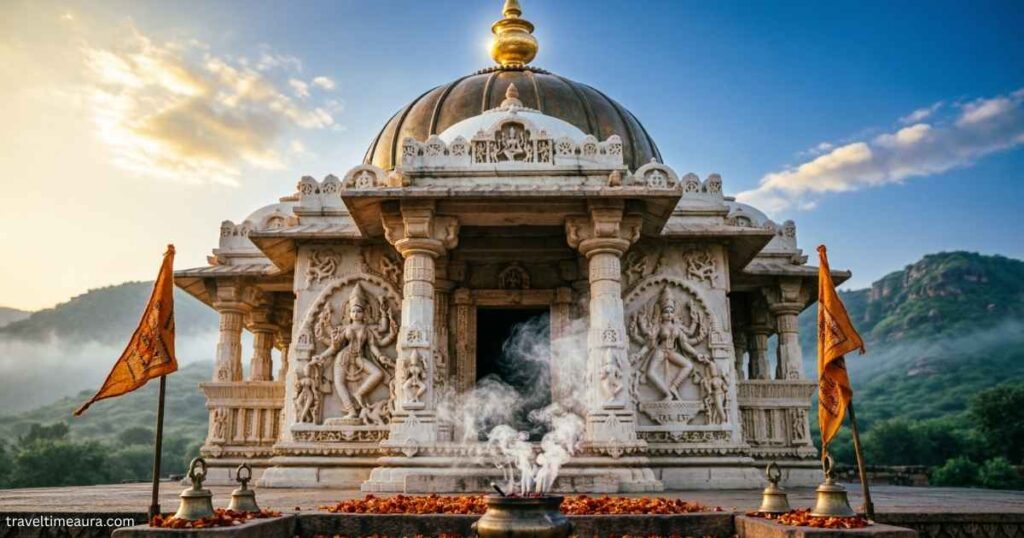
The Spiritual Significance of Ambaji Temple lies in its deep connection with Maa Ambaji, one of the most revered forms of Shakti in Hindu tradition. It is believed that visiting this sacred site brings inner peace, blessings, and spiritual strength. The temple holds great importance for devotees seeking faith, healing, and divine energy.
According to Hindu beliefs, Ambaji Temple is one of the 51 Shakti Peeths, where the heart of Goddess Sati is said to have fallen. This makes it a powerful spiritual center in Gujarat. The temple is also known for its sacred Shree Yantra, which is worshipped instead of an idol, adding to its unique religious identity.
The interpretation may vary depending on the situation.
- Many devotees believe the temple fulfills wishes and removes life obstacles, making it a strong center of faith and devotion.
- The presence of the Shree Yantra is seen as highly powerful, symbolizing divine energy and cosmic balance.
- Some visitors feel deep emotional peace and mental clarity after darshan, especially during aarti and Navratri celebrations.
- From a critical viewpoint, the lack of a traditional idol may feel unusual to first-time visitors who expect conventional worship styles.
- During festivals, the spiritual atmosphere becomes intense, but overcrowding can sometimes reduce the feeling of personal connection.
Overall, the Spiritual Significance of Ambaji Temple is deeply rooted in devotion, tradition, and belief in divine energy. It attracts both faithful devotees and curious travelers who want to understand its cultural and religious importance. Despite differences in perception, the temple continues to remain a powerful spiritual destination for millions of visitors every year.
Ambaji Temple Architecture and Layout
The Ambaji Temple Architecture and Layout feels like a spiritual journey rather than just a place of worship. It is simple yet meaningful, guiding devotees smoothly from the entrance to the sanctum. Every space reduces chaos and distraction, helping visitors focus on prayer while gradually preparing the mind for peaceful and sacred darshan.
Here are some key features that make the temple layout unique:
- The temple follows a traditional Nij Mandir and Garbhgruh structure, where the inner sanctum is kept spiritually minimal. Instead of heavy idol worship, devotees focus on the sacred Shree Yantra, which is placed at the heart of the shrine. This creates a powerful and symbolic spiritual experience rather than a visual one.
- The Chachar Chowk (outer courtyard) acts as a gathering space for devotees. It helps manage large crowds smoothly, especially during festivals like Navratri. This open layout also allows natural movement without congestion, even during peak visiting hours.
- The Mandap area serves as a transitional space between the outer world and the inner sanctum. Here, devotees often pause, pray, or listen to bhajans before entering the main shrine. It creates a mental shift from everyday life to spiritual focus.
- The temple also includes a well-organized Yagnashala, where rituals and havan ceremonies are performed. This space is slightly separate to maintain calm inside the main worship area while still supporting traditional practices.
- One lesser-known fact is that the layout is designed to naturally control crowd flow without complex barriers. The pathways subtly guide movement, almost like the temple itself “directs” devotion in an orderly way.
- Facilities like the Bhojanalaya, Dharamshala, and trust-managed areas are placed strategically around the temple complex. This makes it easier for pilgrims to access food and accommodation without disturbing the spiritual atmosphere.
A Temple Without an Idol
The concept of A Temple Without an Idol at Ambaji Temple is deeply unique and spiritually significant. Instead of a traditional idol, devotees worship the sacred Shree Yantra, making the experience of Ambaji Temple worship different from most Hindu temples.
This practice is rooted in ancient Shakti traditions, where divine energy is represented through geometric symbols rather than physical forms. The Ambaji Temple, one of the prominent Shakti Peeths, follows this rare form of worship to symbolize pure cosmic energy and universal consciousness.
The interpretation may vary depending on the situation.
- The Shree Yantra represents Maa Ambaji’s divine energy, focusing worship on spiritual vibration instead of physical appearance.
- Many devotees feel a deeper sense of meditation and mental clarity because the absence of an idol reduces visual distraction.
- From a spiritual viewpoint, it highlights the idea that God exists in energy form rather than material representation.
- Some first-time visitors may find it unusual or difficult to connect emotionally without a traditional idol.
- Despite different interpretations, it strengthens the belief in Ambaji Temple spiritual significance and ancient Shakti worship practices.
Overall, A Temple Without an Idol reflects a powerful and symbolic approach to devotion. It shifts focus from physical representation to inner faith and energy. This makes Ambaji Temple not just a place of worship, but also a space for deep spiritual reflection and understanding.
Ambaji Ropeway Service at Gabbar Hill
If you want a mix of devotion and a little adventure, the Ambaji Ropeway Service at Gabbar Hill is something you shouldn’t miss. It adds a modern twist to your spiritual journey at Ambaji Temple, making the climb to the sacred hill much easier and more enjoyable.
Gabbar Hill is believed to be the original seat of Maa Ambaji, and reaching the top is considered highly spiritual. The ropeway makes this sacred journey smooth, especially for older devotees and families. Instead of a tiring climb, you get a peaceful aerial ride with beautiful views all around.
It feels a bit like floating above the Aravalli Hills while moving closer to a divine destination. The experience is both calming and exciting at the same time, almost like the journey itself becomes part of your prayer.
Here are some key points that help you understand it better:
- The ropeway connects the main Ambaji Temple area to Gabbar Hill, saving time and physical effort. It is especially helpful during peak seasons like Navratri when the crowd is heavy.
- The ride offers a wide panoramic view of the surrounding landscape, including hills and temple surroundings. Many visitors say the scenery feels peaceful and adds to the spiritual mood of the journey.
- Gabbar Hill is considered highly sacred because it is believed to be the original manifestation site of Maa Ambaji. So, the ropeway is not just transport—it is part of a pilgrimage experience.
- The service is designed for safety and comfort, making it suitable for children, older citizens, and first-time visitors. Even those who cannot climb stairs can easily reach the top.
- A lesser-known detail is that many devotees prefer going up by ropeway and coming down by foot, as they feel it gives a more complete spiritual experience.
In conclusion, the Ambaji Ropeway Service at Gabbar Hill is more than just a convenience. It blends devotion with comfort and adds a beautiful visual experience to your temple visit. It allows you to focus on spirituality without worrying about the climb, making your journey both meaningful and memorable.
Festivals Celebrated at Ambaji Temple
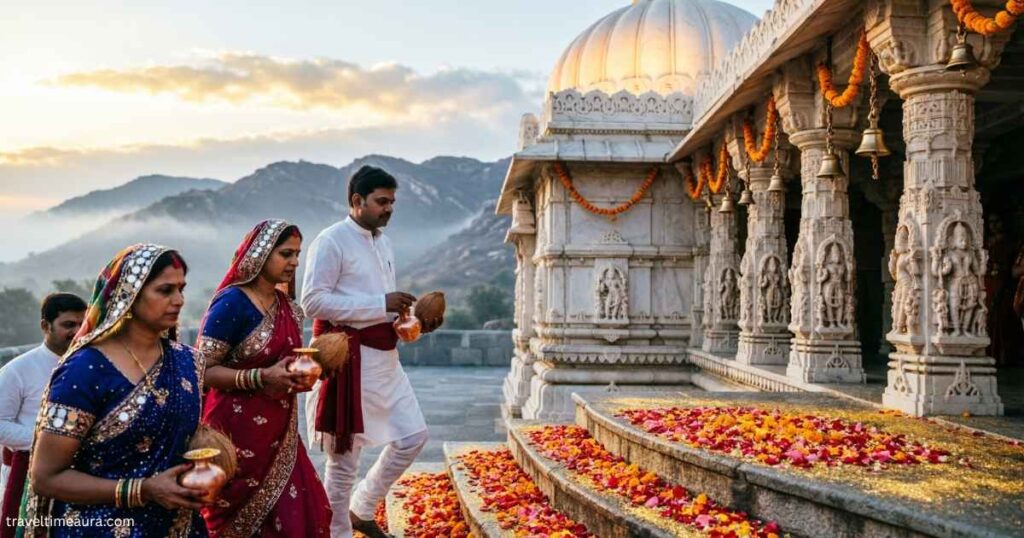
Festivals at Ambaji Temple are not just celebrations—they feel like waves of devotion that completely transform the atmosphere. The temple becomes brighter, louder, and more energetic, filled with chants, lights, and thousands of devotees. If you ever visit during these days, you’ll feel like the entire place is alive with faith.
The Festivals Celebrated at Ambaji Temple are deeply rooted in Shakti worship and local traditions. Each festival brings its own mood, rituals, and special darshan experiences. It’s not just about rituals—it’s about collective devotion, where everyone becomes part of something much bigger than themselves.
Think of it like a spiritual festival season where every day feels different. Some days are peaceful and devotional, while others are full of music, dance, and grand celebrations.
Navratri Festival Celebration
Navratri is the most important festival at Ambaji Temple. The entire temple complex turns into a grand celebration space with lights, Garba, bhajans, and continuous prayers. Devotees from Gujarat, Rajasthan, and nearby states gather in huge numbers. The energy feels almost electric, especially during evening aarti and Garba nights. Many people believe visiting during Navratri gives extra spiritual blessings from Maa Ambaji.
Purnima (Full Moon) Celebrations
Purnima days are considered highly sacred at Ambaji Temple. Devotees believe that darshan during full moon brings peace and positive energy. The temple sees special aarti rituals and extended darshan timings. The calm moonlight combined with devotional chants creates a peaceful and almost meditative atmosphere, very different from festival crowds.
Diwali and Special Hindu Festivals
During Diwali and other major Hindu festivals, the temple is beautifully decorated with lamps and flowers. The lighting feels like a reflection of inner devotion. Devotees visit to seek blessings for prosperity and happiness. Even though it is not as crowded as Navratri, the spiritual warmth is strong and deeply felt.
Annual Temple Ritual Events
Apart from big festivals, the temple also hosts special ritual days managed by the trust. These include yajnas, havan ceremonies, and devotional gatherings. Locals often attend these events regularly, as they believe it strengthens their connection with Maa Ambaji and brings stability in life.
Lesser-Known Local Celebrations
Some smaller regional celebrations are also observed quietly within the temple premises. These are not widely known to tourists but are deeply meaningful for local devotees. They often include special prayers, community bhajans, and small-scale rituals that keep traditions alive across generations.
You may also like this: Palani Temple Timings 2026: Beat the Crowd Early
Places to Visit Near Ambaji Temple
A trip to Ambaji Temple doesn’t end with darshan. In fact, it often feels like the beginning of a wider spiritual journey. The Places to Visit Near Ambaji Temple add nature, history, and devotion to your travel experience, making your visit more meaningful and memorable.
The area around Ambaji is surrounded by hills, sacred spots, and peaceful viewpoints. It’s like stepping into a blend of devotion and natural beauty. You can easily spend an extra day exploring nearby attractions, each offering a different mood and experience.
Think of it like a spiritual circuit—temple first, then nature, then a bit of history and calm reflection. Everything flows together naturally.
Gabbar Hill – The Sacred Origin Point
Gabbar Hill is one of the most important places near the Ambaji Temple. It is believed to be the original seat of Maa Ambaji. Devotees climb or take the ropeway to reach the hilltop shrine. The view from the top feels peaceful, almost like the world slows down for a moment. Many people say the energy here feels stronger and more personal than the main temple.
Kailash Tekri – A Peaceful Hilltop Spot
Kailash Tekri is a quiet hill area that offers a calm break from temple crowds. It is less commercial and more natural, making it perfect for reflection. If you enjoy sitting in silence and looking at scenic views, this place feels like a gentle pause in your journey. It’s often visited by locals who want a peaceful evening walk.
Koteshwar Mahadev Temple – Spiritual Detour
Located a short drive away, Koteshwar Mahadev Temple is dedicated to Lord Shiva. It sits in a serene natural setting near rivers and hills. The atmosphere is very different from Ambaji Temple—quieter and more relaxed. Many visitors combine both temples in one trip to experience both Shakti and Shiva energy in a single journey.
Kumbhariya Jain Temples – Ancient Architecture Gem
The Kumbhariya Jain Temples are a hidden treasure near Ambaji. These temples are known for their detailed carvings and ancient stone architecture. Walking here feels like stepping into history. It’s not just a religious site but also a place for architecture lovers who enjoy fine craftsmanship and peaceful surroundings.
Mount Abu – A Hill Station Escape
If you have extra time, Mount Abu is a great extension to your trip. It’s a popular hill station with cool weather, lakes, and viewpoints. Many travelers compare it to a refreshing break after intense temple visits. Nakki Lake and Sunset Point are especially loved for their scenic charm and relaxed vibe.
Accommodation Options in Ambaji
Accommodation options in Ambaji are quite diverse, making it easy for every type of traveler to find a suitable stay. From budget-friendly dharamshalas to comfortable hotels, Accommodation Options in Ambaji are designed to support pilgrims visiting the Ambaji Temple for darshan and festivals.
Since Ambaji is a major pilgrimage destination in Gujarat, the town offers many stay choices near the temple area. Most accommodations are simple, clean, and focused on providing basic comfort rather than luxury. This makes it ideal for devotees who prioritize convenience and proximity to the temple over premium facilities.
The interpretation may vary depending on the situation.
- Many temple trust dharamshalas offer affordable or free stays for devotees, especially during peak pilgrimage seasons like Navratri. These are simple but clean and located close to the temple for easy access.
- Budget hotels near Ambaji Temple provide private rooms with basic facilities like AC, hot water, and food services. They are suitable for families who want more comfort but still need affordability.
- Mid-range hotels offer better amenities such as room service, parking, and restaurant facilities. These are ideal for travelers staying for a longer duration or visiting with older family members.
- During peak seasons, especially Navratri and Purnima, availability becomes limited, and prices may increase due to high demand. Early booking is highly recommended to avoid inconvenience.
- Some travelers may find limited luxury options in Ambaji compared to major cities, which can be a drawback for those expecting high-end resorts or premium stays.
Overall, Accommodation Options in Ambaji are practical and pilgrimage-focused. While luxury choices are limited, the town offers enough comfort and convenience for a peaceful temple visit. Staying close to Ambaji Temple helps devotees enjoy easy darshan access and a more relaxed spiritual experience.
How to Reach Ambaji Temple
Getting to Ambaji Temple is not just a journey on a map—it often feels like the beginning of a spiritual experience. The How to Reach Ambaji Temple guide becomes especially helpful because devotees travel from different parts of India, often combining faith with a bit of planning.
Ambaji is well connected by road, rail, and air routes through nearby cities in Gujarat and Rajasthan. Whether you are coming from a big metro or a nearby town, the route is fairly smooth. Think of it like a well-connected pilgrimage hub where every road eventually leads toward devotion.
By Air – Nearest Airport Connections
The nearest major airport to Ambaji Temple is in Ahmedabad, which is well-connected to major Indian cities. From the airport, you can hire a taxi or take a bus to reach Ambaji comfortably. The drive takes you through highways and rural landscapes, slowly shifting the mood from city noise to spiritual calm. It feels like the journey itself prepares you for darshan.
By Train – Closest Railway Access
Ambaji does not have its own railway station, but Abu Road Railway Station is the nearest and most convenient option. It is about a short drive away from the temple. Many devotees prefer this route because trains are affordable and well-connected. From Abu Road, shared taxis and buses are easily available, making the final stretch simple and budget-friendly.
By Road – Most Popular Travel Option
Road travel is the most common way to reach the Ambaji Temple. The roads from Ahmedabad, Mount Abu, and nearby towns are smooth and frequently used by pilgrims. State transport buses like GSRTC and private coaches run regularly. Traveling by road also gives you a chance to see small villages, hills, and local culture along the way, almost like a slow introduction to the temple’s spiritual environment.
From Nearby Cities – Easy Pilgrimage Routes
Ambaji is well connected to cities like Ahmedabad, Mount Abu, Abu Road, and even parts of Rajasthan. For example, many families from Ahmedabad plan weekend trips using private cars or tour buses. It’s a simple journey, but it often feels special because many travelers treat it as both a religious visit and a short getaway.
Local Travel Tips – Making Your Journey Smoother
A lesser-known tip is that weekends and festival seasons can get very crowded on all routes leading to Ambaji. Booking transport in advance helps avoid delays. Also, early morning travel is often smoother and more peaceful. Many experienced pilgrims prefer arriving a day early to avoid the rush and enjoy a relaxed darshan experience.
Distance of Ambaji Temple from Major Cities
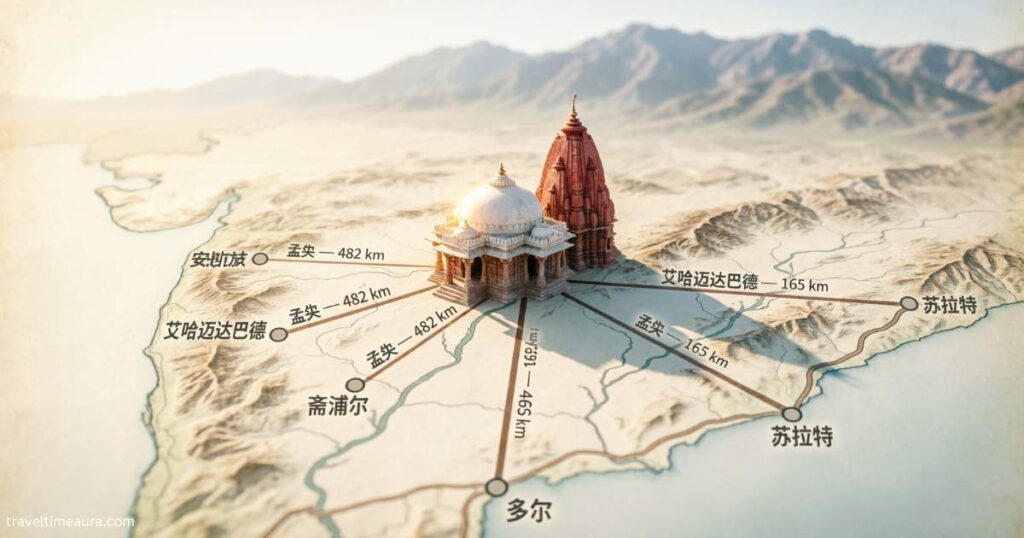
Understanding the distance of Ambaji Temple from major cities helps devotees plan their journey more comfortably. It allows you to estimate travel time, choose the right transport, and schedule your darshan without rush or confusion.
Ambaji Temple is well-connected to many cities in Gujarat, Rajasthan, and nearby states. Whether you are traveling by bus, car, or train, the journey is smooth and manageable. Most devotees prefer road travel because it offers flexibility and scenic views along the way.
Here are approximate distances from important cities to Ambaji Temple:
| City | Distance from Ambaji |
| Ahmedabad | 184 km |
| Vadodara | 284 km |
| Surat | 380 km (approx.) |
| Rajkot | 373 km |
| Jaipur | 410 km (approx.) |
| Udaipur | 180 km (approx.) |
| Mount Abu | 45 km |
| Palanpur | 65 km |
| Abu Road | 20 km (approx.) |
| Gandhinagar | 170 km (approx.) |
Travel time varies depending on road conditions and traffic. Ahmedabad is the most common starting point, with a journey of around 4 to 5 hours. From Mount Abu and Abu Road, the trip is very short, making it ideal for combined spiritual visits.
Devotees often plan their journey based on these distances to match Ambaji Temple timings and avoid peak crowd hours. Knowing the route in advance also helps in selecting better transport options and planning overnight stays if required.
Ambaji Temple Contact Information
Having the correct Ambaji Temple contact information is very helpful for devotees planning their visit. It allows you to get authentic updates about darshan timings, crowd conditions, and temple services directly from the official authority.
The Ambaji Mata Devasthan Trust manages all operations of the temple. From Ambaji Temple timings to festival arrangements and accommodation details, everything is handled through the official office. Contacting them ensures you receive accurate and updated information before your journey.
Here are the important contact details of Ambaji Temple:
| Contact Type | Details |
| Temple Address | Ambaji, Taluka Danta, District Banaskantha, Gujarat – 385110 |
| Temple Trust Office | Ambaji Mata Devasthan Trust Office |
| Contact Phone | 02749-262236 |
| Office Phone | 02749-262930 |
| Fax Number | 02749-264536 |
| Alternative Fax | 02749-262931 |
| Official Email | ambajitempletrust@gmail.com |
| Information Desk | Temple Inquiry Counter (On-site) |
You can use these contacts to check Ambaji Darshan Time, crowd updates, or special darshan arrangements. It is especially useful during festivals like Navratri when timings may change due to heavy footfall.
The temple trust also shares updates regarding accommodation, bhojanalaya services, and special pujas through these channels. During peak seasons, calling the office helps avoid confusion and ensures a smoother pilgrimage experience.
Overall, keeping these Ambaji Temple contact details handy makes your visit more organized and stress-free. It helps you stay informed and plan your darshan with confidence.
Ambaji Temple Open or Closed Today
Knowing whether the Ambaji Darshan Time is very important for devotees planning their darshan. It helps you avoid unnecessary travel and ensures a smooth spiritual visit without confusion or delay.
The temple generally follows a fixed daily schedule, but timings can change during festivals, special rituals, or maintenance activities. That’s why checking the latest update before visiting is always a good idea, especially during peak seasons like Navratri or Purnima.
Understanding the Ambaji Temple’s Open or Closed Today status helps you plan your journey better and align your visit with darshan timings.
| Status Type | Details |
| Normal Days Open | Temple remains open for all darshan slots |
| Morning Status | Opens early around 6:00 AM for devotees |
| Afternoon Break | Temple may close temporarily between darshan sessions |
| Evening Status | Reopens for evening darshan and aarti |
| Special Days Update | Timings may change during festivals or rituals |
In most cases, the temple remains open throughout the day with short breaks between darshan sessions. Devotees can easily adjust their visit based on morning, afternoon, or evening slots, depending on their convenience.
However, during special occasions or maintenance work, temporary closures or timing adjustments may occur. It is always recommended to confirm the latest updates before traveling to ensure a hassle-free darshan experience.
Ambaji Temple Timings Tomorrow
Planning your visit becomes much easier when you know the Ambaji Darshan Time. It helps devotees organize travel, accommodation, and darshan slots without last-minute confusion or rush.
Since Ambaji Temple follows a structured daily routine, tomorrow’s timings are usually similar to regular schedules. However, slight changes can happen during festivals, special pujas, or crowd management days. That’s why checking ahead always keeps your journey smooth and well-planned.
Knowing the Ambaji Temple Timings Tomorrow is especially useful for pilgrims coming from distant cities. It ensures you arrive at the right time and don’t miss important darshan or aarti sessions.
| Darshan Slot | Expected Timings (Tomorrow) |
| Morning Darshan | 07:00 AM to 11:30 AM |
| Afternoon Break | 11:30 AM to 12:30 PM |
| Afternoon Darshan | 12:30 PM to 04:30 PM |
| Evening Darshan | 06:30 PM to 09:00 PM |
These timings generally remain consistent unless there is a special religious event or festival like Navratri or Purnima. In such cases, the temple may extend darshan hours or adjust break timings to manage crowd flow.
It is always recommended to recheck updates from official sources before visiting. This helps you plan better and ensures a peaceful and well-timed darshan experience at Ambaji Temple.
Ambaji Temple Aarti Time Today
The Ambaji Darshan Time is one of the most important details for devotees planning to attend the sacred rituals. Aarti is a deeply spiritual moment where prayers, lamps, and chants create a powerful devotional atmosphere.
Before visiting, it is helpful to know the exact aarti schedule so you don’t miss these divine experiences. The temple follows a structured routine every day, and timings may slightly vary during festivals or special occasions.
Understanding the Ambaji Temple Aarti Time Today ensures you can plan your darshan around these sacred moments of worship.
| Aarti Type | Timings (Today) |
| Morning Aarti | 07:30 AM – 08:00 AM |
| Rajbhog Aarti | 12:00 PM |
| Evening Aarti | 06:30 PM – 07:00 PM |
| Shayan Aarti | Around 09:00 PM |
| Special Aarti | During festivals only |
Morning aarti begins the day with peace and devotion, as devotees gather early to seek the blessings of Maa Ambaji. Rajbhog aarti is performed in the afternoon as part of the traditional offering rituals.
Evening aarti is the most popular, filling the temple with lamps, bells, and chants. The night Shayan Aarti concludes the day on a calm and devotional note. Together, these rituals make the Ambaji Darshan Time a truly spiritual experience for every visitor.
Ambaji Darshan Time Latest News
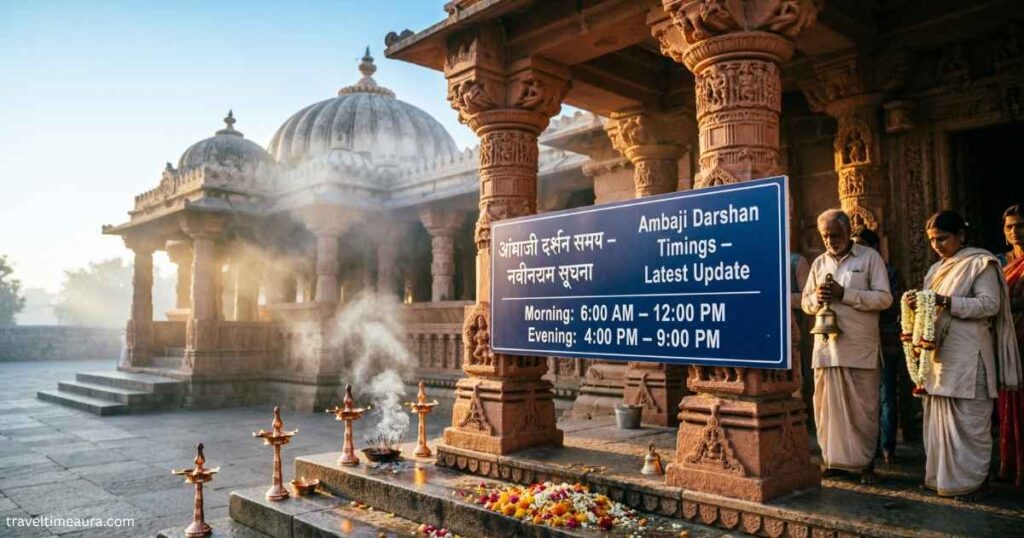
The Ambaji Darshan Time Latest News is important for devotees who want updated information before visiting the temple. Many visitors check for changes in darshan schedules, especially during festivals, crowd rush, or special rituals. Staying informed helps avoid delays and ensures a smooth spiritual experience.
The Ambaji Darshan Time Latest News usually includes updates on timing adjustments, special darshan arrangements, and crowd management notices. Temple authorities may change timings during Navratri, Purnima, or maintenance days. That’s why checking the latest updates before travel is always helpful for a peaceful and well-planned visit.
You may also like this: Warning: Wednesday Yamagandam Timings You Can’t Ignore
Frequently Asked Questions
When does Ambaji Darshan Time start in the morning?
Morning darshan usually starts early around sunrise. Devotees can enter calmly for peaceful prayers and a quiet temple atmosphere.
Does Ambaji Darshan Time change during festivals?
Yes, Ambaji Darshan Time often extends during Navratri and Purnima. More darshan slots are added for managing large crowds smoothly.
How many Ambaji Darshan Time sessions are available in a day?
Temple usually offers morning, afternoon, and evening sessions. Each slot allows devotees flexible timing for peaceful visits.
Can the Ambaji Darshan Time be affected by crowd levels?
Yes, heavy crowds may slightly delay entry or extend waiting time. Temple management adjusts flow for a smooth darshan experience.
Is night darshan available according to the Ambaji Darshan Time?
Evening darshan is the last session, ending around night hours. Devotees should plan early to avoid missing the final entry.
Conclusion
In conclusion, Ambaji Darshan Time helps devotees plan a smooth and peaceful temple visit. Knowing Ambaji Darshan Time in advance makes travel easier and avoids last-minute confusion. Many visitors also check Ambaji Temple Timings, Ambaji Temple time, and Ambaji Mandir timing before reaching. It ensures better planning and less waiting time.
The Ambaji Mandir Darshan Time and Ambaji Darshan Time today may change slightly during festivals or special rituals. Still, the temple follows a regular schedule most days. Understanding Ambaji Darshan Time gives clarity about morning, afternoon, and evening slots. It helps devotees enjoy a calm and spiritual experience. Always check updates before visiting for the best darshan experience.