Many people feel confused and worried when they check Sunday Yamagandam Timings before starting their day. People search Sunday Rahukalam Yamagandam Timings, Sunday Rahukalam Yamagandam, Yamagandam Sunday, Sunday Yamagandam time daily. This confusion often grows when people try to understand astrology timing rules without clear guidance. We will explain everything clearly so you finally understand these timings and their impact.
This blog will help you understand Sunday Yamagandam Timings simply and practically today. You will learn how Rahu Kalam, Yamagandam, and planetary timings affect your daily decisions clearly. We break down astrology timing rules so you can plan your day better, easily understood. Keep reading to avoid confusion and make smarter choices using accurate Hindu astrology timings.
Three Key Time Periods
We introduce three key time periods in Hindu astrology that guide daily planning. Rahu Kalam, Yamagandam, and Gulika Kalam are considered inauspicious for starting new tasks. These timings come from Panchangam calculations based on sunrise and planetary positions, helping people avoid negative outcomes in daily decisions and spiritual planning routines.
We explain why these three timings matter in everyday life and decision-making. Many people follow them for spiritual balance and better results in important tasks. Understanding these periods helps you plan activities wisely using traditional Hindu astrology guidance for improved outcomes and calm mental clarity in daily life decisions.
Rahu Kalam
Rahu Kalam is a daily inauspicious time period in Hindu astrology during which people traditionally avoid starting new or important activities. It changes each day based on the local sunrise, and astrologers calculate it by dividing the day into fixed segments and assigning each segment to different planetary influences.
Many people believe that activities begun during this period may face delays or obstacles, so they prefer to schedule important work outside of it for smoother outcomes and peace of mind.
Yamagandam
Yamagandam is another inauspicious time in Hindu astrology that people usually avoid for starting new activities. It is linked with Yama, the deity of death, and is calculated daily based on sunrise. Many believe it can bring delays or obstacles, so they plan important work outside Yamagandam time carefully.
Kuligai (Gulika)
Astrologers refer to Kuligai, also known as Gulika Kalam, as a specific time period in Hindu astrology and often consider its effects neutral or mixed. They calculate it daily based on sunrise and planetary positions. Some traditions even see it as useful for certain tasks, but many still plan cautiously during the Gulika time periods carefully.
Sunday Rahu Kalam Timings
Rahu Kalam timings on Sunday typically fall in the late afternoon. According to traditional beliefs, planetary alignments influence this period and make it inauspicious, and people often avoid starting important work during it to prevent delays or obstacles.
- This period generally falls in the evening hours on Sundays after calculating sunrise-based timing.
- Many people avoid beginning travel, meetings, or new projects during this time window.
- It is often used for prayer, reflection, or spiritual activities instead of material work.
- Some traditions suggest simple remedies like lighting lamps for a positive energy balance.
- Overall, it is seen as a cautious time where important decisions are delayed.
Sunday Rahu Kalam Yamagandam Timings
Two important inauspicious time periods occur on Sunday that people carefully observe before planning major tasks. These timings are based on sunrise calculations and planetary positions that influence daily decisions and traditional Hindu astrology guidance for better timing awareness and smoother life planning overall.
| Period | Sunday Timing |
| Rahu Kalam | 4:30 PM – 6:00 PM |
| Yamagandam | 12:00 PM – 1:30 PM |
| Kuligai (Gulika) | 3:00 PM – 4:30 PM |
The table shows that Sunday has multiple sensitive time slots spread across the afternoon hours. Yamagandam energy influences midday, while Rahu’s impact governs the later hours. Because of this pattern, people generally prefer mornings for important work and positive beginnings.
Sunday Gulika Kalam Timings
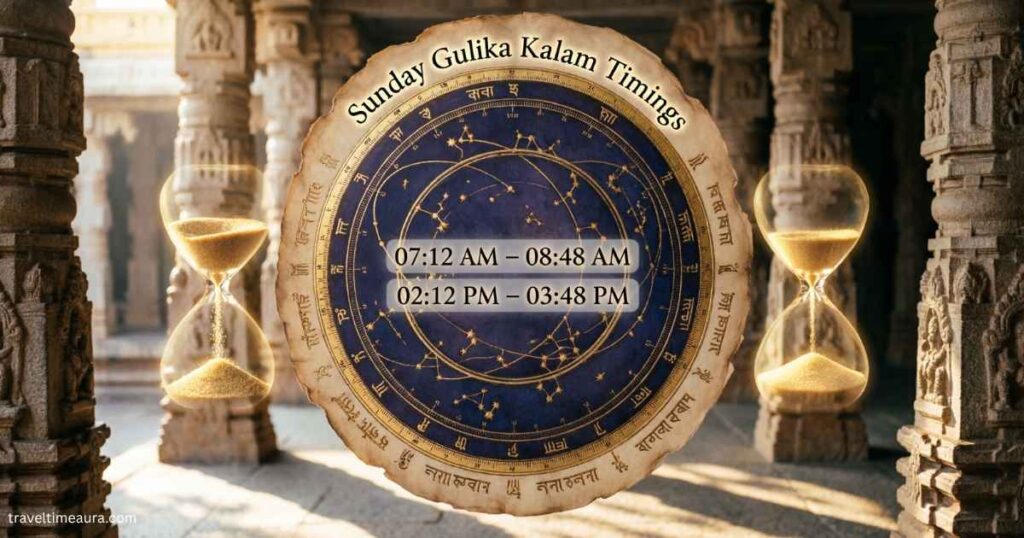
Sunday Gulika Kalam Timings usually fall in the afternoon hours and are linked with repetition and long-term results in Hindu astrology. People plan activities carefully during this period to either gain stability or avoid unwanted outcomes in daily life decisions and financial planning routines.
- This time period generally appears in the mid to late afternoon on Sundays.
- Many believe it supports actions that are repetitive or long-term in nature.
- People often consider it suitable for savings-related or wealth-building decisions.
- Some people choose it for starting projects meant to grow steadily over time.
- It is avoided for sad events or emotionally heavy responsibilities.
- People usually do not recommend loans and borrowing during this period.
- Overall, it is treated as a mixed energy time requiring careful planning.
Sunday Good Timings
On Sundays, morning time windows provide peaceful and positive energy, and people consider them suitable for starting important tasks. Traditional timing guidance associates these hours with stable and balanced energy, so people use them for work, planning, and spiritual practices.
- 6:00 AM to 7:30 AM – Ideal for prayers, meditation, and setting intentions
- 7:30 AM to 9:00 AM – Good for travel, discussions, and light work beginnings
- 9:00 AM to 12:00 PM – Suitable for meetings, business deals, and important decisions
- Morning hours – Best overall period for positive and productive activities
Daily Timings: A Weekly Schedule
Daily timing schedules in Hindu astrology help people plan each day of the week more wisely. These patterns are based on sunrise and planetary shifts, guiding when to act or wait. They create a structured rhythm that supports better decision-making, balance, and awareness in everyday life activities and routines.
A weekly schedule shows how Rahu Kalam, Yamagandam, and Gulika Kalam shift daily. Each day carries different timing influences that affect actions differently. By following this pattern, people choose safer periods for work, travel, and spiritual tasks, improving success chances and reducing unexpected delays in important life situations overall.
Rahu Kalam Timings
Rahu Kalam Timings are daily time slots in Hindu astrology that people avoid for starting new work. These periods change every day based on sunrise and planetary movements. Many people believe this time carries unstable energy, so they plan important tasks, travel, and decisions outside this window to achieve better results.
| Day | Time |
| Sunday | 4:30 PM – 6:00 PM |
| Monday | 7:30 AM – 9:00 AM |
| Tuesday | 3:00 PM – 4:30 PM |
| Wednesday | 12:00 PM – 1:30 PM |
| Thursday | 1:30 PM – 3:00 PM |
| Friday | 10:30 AM – 12:00 PM |
| Saturday | 9:00 AM – 10:30 AM |
Yamagandam Timings
Yamagandam Timings are daily inauspicious periods in Hindu astrology that people link with Yama, the deity associated with discipline and time. Astrologers calculate these hours from sunrise, and they change every day. People usually avoid starting new work, travel, or important decisions during this period to prevent delays or unwanted obstacles in life.
| Day | Time |
| Sunday | 12:00 PM – 1:30 PM |
| Monday | 10:30 AM – 12:00 PM |
| Tuesday | 9:00 AM – 10:30 AM |
| Wednesday | 7:30 AM – 9:00 AM |
| Thursday | 6:00 AM – 7:30 AM |
| Friday | 3:00 PM – 4:30 PM |
| Saturday | 1:30 PM – 3:00 PM |
Kuligai (Gulika) Timings
Kuligai, also known as Gulika Timings, are special time periods in Hindu astrology that repeat daily based on sunrise calculations. These hours are believed to influence stability and long-term results. Many people choose them carefully, avoiding emotional or risky decisions while using this time for steady, constructive, and planned activities.
| Day | Time |
| Sunday | 3:00 PM – 4:30 PM |
| Monday | 1:30 PM – 3:00 PM |
| Tuesday | 12:00 PM – 1:30 PM |
| Wednesday | 10:30 AM – 12:00 PM |
| Thursday | 9:00 AM – 10:30 AM |
| Friday | 7:30 AM – 9:00 AM |
| Saturday | 6:00 AM – 7:30 AM |
Sunday Yamagandam Timings 2026
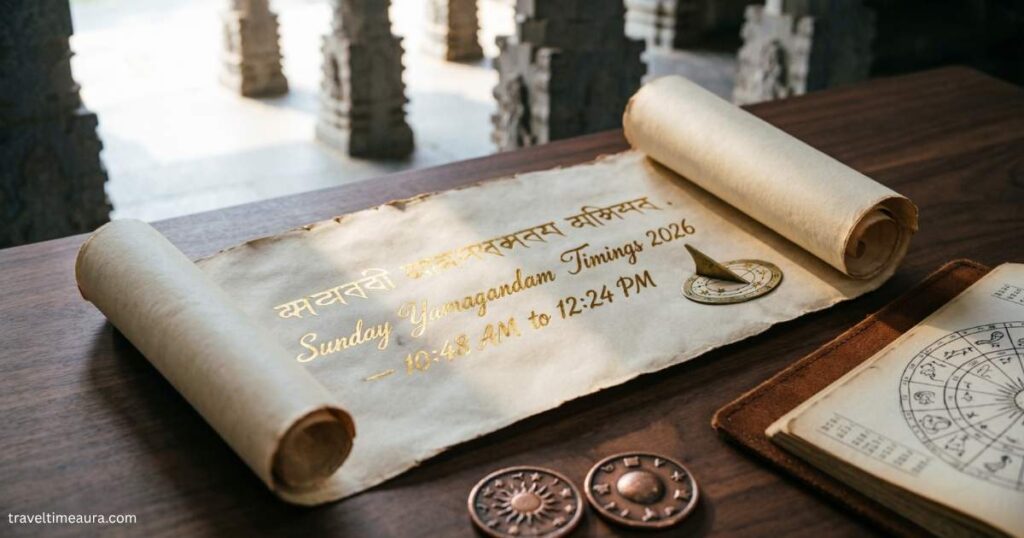
Sunday Yamagandam Timings for 2026 are expected to follow the traditional pattern of Hindu astrology, where astrologers calculate them based on sunrise. People generally avoid starting important work during this period because they believe planetary influences may cause delays or obstacles in progress, especially during this midday time window across most regions and cities.
In 2026, Sunday Yamagandam Timings usually stay close to the midday slot, but small changes may occur depending on local sunrise. People rely on Panchangam guidance or sunrise-based tools to confirm exact timing. This helps ensure accurate planning for work, travel, and spiritual activities on Sundays throughout the year.
- Timing is calculated using the local sunrise position for each region.
- People generally consider the midday window inauspicious for new beginnings.
- Small variations may appear depending on the city and geographic location.
- Traditional Panchangam helps confirm the exact Yamagandam timing details.
- Many people avoid important decisions during this specific time period.
Yamagandam Timings Tomorrow
Yamagandam Timings Tomorrow depend on the weekday and are calculated from local sunrise. People usually check a Panchangam or timing chart to avoid starting important work during this period and choose safer hours for planning, travel, or decision-making activities in daily life routines.
- Timing changes each day based on sunrise and weekday patterns.
- It is generally avoided for starting new projects or important tasks.
- People consider morning hours better for productive and positive actions.
- Many people prefer checking the daily Panchangam for accurate timing details.
Sunday Rahu Kalam Yamagandam Timings 2026
Sunday Rahu Kalam Yamagandam Timings 2026 include multiple inauspicious time slots during the afternoon. These periods are calculated using sunrise-based astrology rules. People often avoid starting important work during these hours and prefer planning activities in the morning for better stability and smoother outcomes in daily life decisions.
- Yamagandam: 12:00 PM – 1:30 PM – avoided for new beginnings and key decisions
- Kuligai: 3:00 PM – 4:30 PM – linked with repetitive or mixed outcomes in actions
- Rahu Kalam: 4:30 PM – 6:00 PM – considered unstable for starting important work
- Morning hours (before 12:00 PM) – preferred for travel, meetings, and fresh tasks
Yamagandam Timings Thursday
Astrologers calculate Yamagandam Timings on Thursdays from sunrise, forming a specific inauspicious period in Hindu astrology. People usually avoid starting new work during this time because they believe decisions made then may face delays or obstacles, so they often plan their daily routines more carefully around it.
On Thursday, Yamagandam usually falls between 6:00 AM and 7:30 AM based on standard Panchangam timing. Many prefer using this period for routine or non-important tasks instead of major decisions. Following these timings helps people align daily actions with traditional astrology guidance for smoother progress and better planning outcomes overall.
You may also like this: Warning: Wednesday Yamagandam Timings You Can’t Ignore
Spiritual Benefits of Performing Pooja
Performing pooja regularly helps create a calm and focused mind in daily life. It brings a sense of peace, gratitude, and emotional balance. Many people feel more connected to their faith during this practice, which reduces stress and improves positive thinking in difficult situations.
Spiritual pooja practices are believed to attract positive energy and remove negativity from life. It encourages discipline, devotion, and self-reflection every day. People often feel mentally stronger and more stable after prayer, as it builds inner confidence and supports a peaceful lifestyle with better clarity in decision-making.
Benefits of Rahu Kalam Pooja
Performing Sunday Yamagandam Timings based spiritual remedies like Rahu Kalam pooja is believed to reduce negative influences and improve life stability. Many people follow this practice with devotion, especially during challenging phases, to invite positive energy, mental strength, and better outcomes in personal and professional situations.
- Helps reduce financial stress and long-standing debt problems gradually
- Believed to remove delays in marriage or relationship progress issues
- Supports overcoming obstacles related to childbirth or family planning concerns
- Encourages better growth and stability in career or job situations
- May reduce the effects of karmic or planetary dosha influences over time
- Improves mental peace during stressful life situations and periods of uncertainty
- Strengthens spiritual connection and builds positive thinking habits daily
Benefits of Yamagandam Pooja
People believe that performing pooja during Sunday Yamagandam Timings reduces negative planetary effects and brings mental strength. Devotees use this time for prayers and remedies to overcome life struggles, and they consider it helpful for restoring balance, focus, and positive energy during difficult phases of life.
- Helps reduce obstacles in personal and professional life progress
- Believed to calm the negative effects linked with planetary timing influences
- Supports emotional stability during stressful or confusing situations
- Encourages spiritual discipline and a stronger connection with faith practices
- May help in removing delays in important life decisions
- Improves focus and clarity when facing major challenges
- Strengthens inner confidence through regular devotional practices
Bringing Balance to Your Schedule
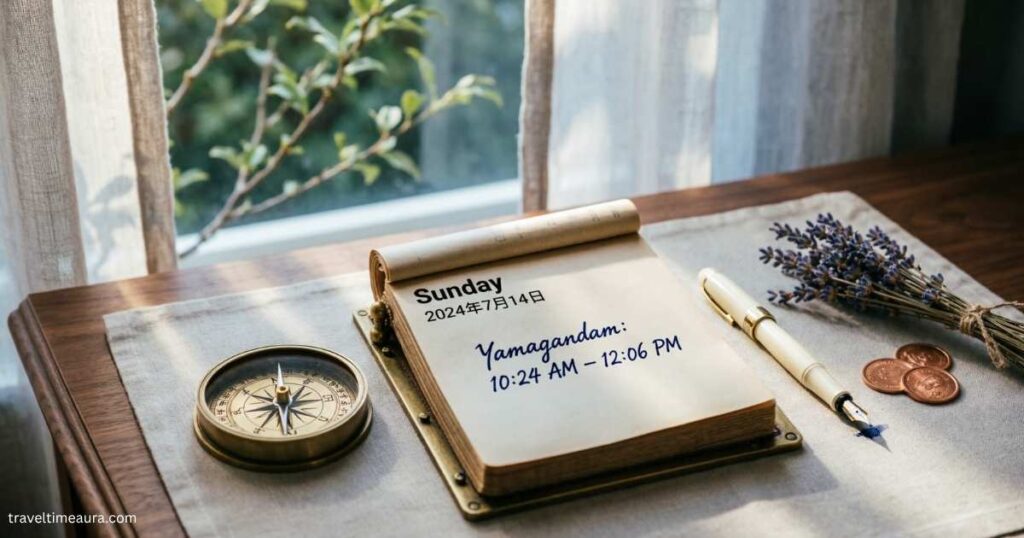
Ever feel busy but unproductive? Bringing balance to your schedule means doing tasks at the right time. It uses Panchangam calendar timing and helps create calm, focused, effective daily planning.
Here is a simple way to understand how balance can shape your day:
- Morning hours (6:00 AM – 12:00 PM): This is your “fresh energy zone.” It’s ideal for important work, decision-making, travel, or anything that needs focus. Many people notice their mind feels clearer here, like a calm road before traffic begins.
- Midday block (12:00 PM – 1:30 PM): People traditionally link this period with Yamagandam in astrology and usually avoid starting new beginnings during it. Instead, it works better for rest, reflection, or completing light tasks. It’s like a natural pause button in the middle of the day.
- Early afternoon (1:30 PM – 3:00 PM): A more neutral phase where regular work continues without pressure. You can handle routine tasks, but it’s better to avoid major decisions. Think of it as steady walking after a short break.
- Late afternoon (3:00 PM – 4:30 PM): Many traditions associate this period with Gulika influences. Interestingly, people often use it for savings-related or long-term planning activities. It’s not about fear—it’s about choosing actions that grow slowly but steadily.
- Evening (4:30 PM onwards): This is usually a winding-down phase. Instead of starting something new, it’s better to review your day, spend time with family, or focus on spiritual practices that bring mental peace.
What’s important to understand is this: bringing balance to your schedule isn’t about strict rules. It’s about awareness. When you align your actions with natural energy patterns—whether through modern time management or traditional Vedic astrology timing systems—your day starts to feel less chaotic and more meaningful.
Frequently Asked Questions
When does Sunday Yamagandam occur?
It usually falls around midday on Sundays, based on sunrise and traditional Panchangam calculations for timing accuracy.
How is Sunday Yamagandam Timings calculated?
Astrologers calculate it by dividing the time from sunrise into equal parts, and it shifts slightly each week based on location and seasonal changes.
Can important work be started during Sunday Yamagandam Timings?
Most traditions advise people to avoid new beginnings during this period because they associate it with delays and unstable results.
Which activities are suitable during Sunday Yamagandam Timings?
People often use this time for rest, reflection, or simple routine tasks instead of major decision-making activities.
Do Sunday Yamagandam Timings remain the same every week?
No, timings change slightly based on local sunrise variations, so checking a Panchangam gives the most accurate schedule.
Conclusion
In conclusion, understanding Sunday Yamagandam Timings helps you plan your day with more awareness and calm thinking. Many people follow Sunday Yamagandam Timings to avoid confusion during important tasks. It is also useful when checking Sunday Rahukalam Yamagandam Timings, Sunday Rahukalam Yamagandam, or Yamagandam Sunday patterns.
When you learn about Sunday Yamagandam Timings, you start noticing how Sunday Yamagandam time can affect planning and decision-making. These traditional timing ideas are not about fear but balance and discipline. Many people adjust their routine around these timings to stay more organized and focused. Understanding these timing patterns gives better clarity for daily life scheduling and helps in making more balanced and thoughtful decisions throughout the day with improved planning and awareness.