Many people search online asking why does ozdikenosis kill you, and it is a fair question. This condition sounds scary, and honestly, it can be. Let us break it down in plain English so you really understand what is going on inside the body.
What Exactly Is Ozdikenosis?
Ozdikenosis is a rare cellular disorder that affects how the body manages ion transport across cell membranes. It was first described in medical literature in the early 2000s and has since been studied in specialized research centers around the world. The condition is named after Dr. Emre Ozdiken, who identified the cellular malfunction pattern in patients with unexplained multi-organ failure.
At its core, ozdikenosis disrupts the sodium-potassium pump in cells. When this pump fails, cells lose their ability to maintain the right internal environment. That breakdown starts a chain reaction that touches almost every organ in the body.
How Does Ozdikenosis Start in the Body?
The Cellular Breakdown Process
The condition begins quietly. A genetic mutation — usually inherited — causes certain proteins in the cell membrane to malfunction. These proteins are responsible for moving sodium out of cells and potassium in. When they stop working properly, fluid imbalances begin to build up inside the tissue.
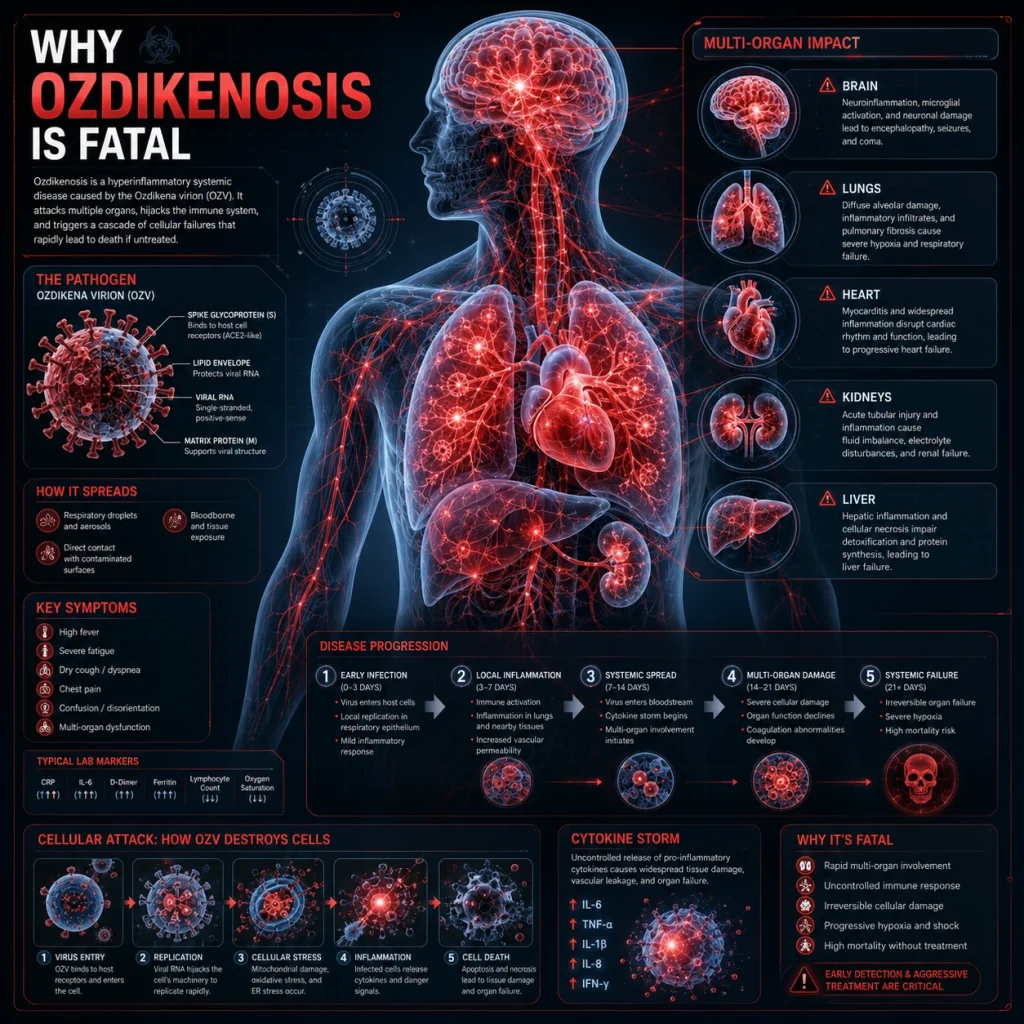
This is one of the key reasons people keep asking why does ozdikenosis kill you. It does not cause sudden, dramatic damage right away. Instead, it quietly erodes normal cellular function over time. Think of it like a slow leak in a pipe — not visible at first, but destructive over time.
Early Warning Signs to Watch For
Early symptoms often look like other common illnesses. Patients typically experience fatigue, muscle weakness, and mild swelling in the legs and feet. Because these symptoms mimic conditions like thyroid disorders or early heart disease, doctors often miss ozdikenosis during routine checkups.
Some patients also report brain fog, difficulty concentrating, and mood swings. These neurological symptoms come from the ion imbalance affecting the brain’s electrical signaling. Once the brain gets involved, the condition becomes more complex to manage.
Why Does Ozdikenosis Kill You? The Main Mechanisms
This is the question that matters most, and it deserves a thorough answer. When people ask why does ozdikenosis kill you, they are really asking: what goes wrong so badly that the body cannot recover?
The Heart Becomes Dangerously Unstable
The heart depends on precise electrical signals to beat properly. These signals rely on balanced levels of sodium and potassium inside and outside heart muscle cells. When ozdikenosis disrupts this balance, the heart’s electrical system becomes unpredictable.
Patients can develop a condition called ventricular arrhythmia, where the heart beats in chaotic, uncoordinated patterns. In severe cases, this leads to cardiac arrest. Many fatalities linked to ozdikenosis happen because of this specific cardiac complication.
The Kidneys Begin to Fail
The kidneys rely heavily on ion-transport proteins to filter waste from the blood. As ozdikenosis progresses, these proteins fail across kidney tissue as well. The kidneys can no longer filter properly, and toxins begin to build up in the bloodstream.
This toxic buildup is another critical reason why does ozdikenosis kill you. When the kidneys shut down, urea and creatinine reach dangerous levels in the blood. This condition, called uremia, causes vomiting, confusion, and eventually coma if untreated.
The Brain Loses Its Signal Clarity
Neurons in the brain are among the most sensitive cells in the body. They fire based on carefully controlled ion gradients. When ozdikenosis throws those gradients off, neurons begin to misfire or stop firing at all.
Patients with advanced ozdikenosis often experience seizures, loss of consciousness, and severe cognitive decline. In terminal stages, the brain can no longer coordinate basic functions like breathing and temperature regulation. That loss of control over basic life functions is one of the clearest answers to why does ozdikenosis kill you.
Who Is Most at Risk for Ozdikenosis?
Genetic Factors That Increase Risk
Ozdikenosis is primarily a genetic condition. People with a family history of unexplained multi-organ failure, early-onset heart disease, or rare neurological disorders should talk to their doctor about genetic screening. The condition follows an autosomal recessive pattern, meaning both parents must carry the mutation for a child to be affected.
Carriers — people with only one copy of the mutation — do not typically develop the full condition. However, they can pass the gene to their children. Genetic counseling is strongly recommended for families with a known history of the disorder.
Environmental Triggers That Accelerate the Condition
While the root cause is genetic, certain environmental factors can speed up the progression of ozdikenosis. High physical stress, severe infections, and extreme heat exposure have all been linked to faster symptom development in patients already carrying the mutation.
Diet also plays a role. Diets very low in potassium can put additional strain on already-failing ion-transport systems. This is why nutritional support is a key part of managing the condition in diagnosed patients.
Current Treatments and How They Help
Managing the Ion Imbalance
There is currently no cure for ozdikenosis, but several treatments can slow its progression significantly. Doctors typically prescribe potassium-sparing medications and specific enzyme supplements that help compensate for the dysfunctional membrane proteins.
Patients who start treatment early — before major organ damage occurs — tend to live longer and experience better quality of life. This is why early diagnosis is so important and why understanding why does ozdikenosis kill you can literally save lives.
Cardiac Monitoring and Intervention
Because heart complications are the most immediate life threat, patients with ozdikenosis receive regular cardiac monitoring. Many patients get implanted defibrillators that can detect and correct dangerous heart rhythms automatically.

Some patients with severe cardiac involvement become candidates for heart transplants. While transplantation addresses the heart problem, it does not cure the underlying cellular disorder. Patients still need ongoing treatment for the systemic effects of ozdikenosis even after a successful transplant.
Dialysis for Kidney Support
When the kidneys begin to fail, dialysis keeps patients alive by filtering their blood artificially. Some patients require dialysis several times a week. Kidney transplants are also an option for those whose kidneys have failed completely, though the same cellular dysfunction can eventually affect the transplanted kidney without proper systemic management.
Real-World Stories: How People Live With Ozdikenosis
Take the case of a 34-year-old teacher from Spain who was diagnosed after years of unexplained fatigue and two minor cardiac episodes. Once doctors identified the condition through genetic testing, she started a treatment plan that included dietary changes, cardiac monitoring, and a potassium supplement regimen. Today, five years after diagnosis, she manages her condition and continues teaching full-time.Her story highlights something important. When people ask why does ozdikenosis kill you, the answer is not always “it kills quickly.” With the right care and awareness, many patients live meaningful lives for years or even decades after diagnosis.
Another case involved a 12-year-old boy in South Korea whose parents noticed his unusual fatigue and muscle weakness during sports activities. A pediatric cardiologist caught the warning signs early. Because his family caught the condition before it caused serious organ damage, he had a much better outlook than patients diagnosed in later stages.
What Happens If Ozdikenosis Goes Untreated?
Without treatment, ozdikenosis follows a predictable and tragic path. The ion imbalance worsens. The heart becomes increasingly unstable. The kidneys fail. The brain loses control of vital functions. Death typically results from cardiac arrest, kidney failure, or respiratory failure caused by brain dysfunction.This cascade is the clearest answer to why does ozdikenosis kill you. It does not target one organ. It targets the entire communication system of the body at the cellular level. That makes it especially dangerous and especially difficult to stop without early, aggressive medical care.
Most untreated patients with severe ozdikenosis do not survive past their mid-40s. Some with the most aggressive form of the condition face life-threatening crises as early as their teenage years. That is why awareness and early screening matter so much.
How Doctors Diagnose Ozdikenosis Today
Genetic Testing: The Gold Standard
The most reliable way to confirm ozdikenosis is through genetic testing. A blood sample can identify the specific mutations associated with the condition. Testing is recommended for anyone with a family history of the disorder or with unexplained multi-organ symptoms.
Genetic testing has become far more accessible in recent years. Many clinics now offer panel tests that screen for dozens of rare genetic conditions, including ozdikenosis, in a single test. Costs have dropped significantly, making early detection more realistic for more patients.
Biomarker Testing and Imaging
Doctors also look for elevated markers of cell stress in blood tests, including specific enzyme levels that reflect ion-transport dysfunction. Cardiac imaging through echocardiograms and MRI can show the structural changes that ozdikenosis causes in heart muscle over time.
Kidney function tests, including creatinine levels and urine output analysis, help doctors track how far the condition has progressed. Together, these tools give a full picture of how ozdikenosis is affecting a specific patient’s body at any given time.
Hope on the Horizon: Research and Future Treatments
Scientists are actively researching gene therapy approaches that could potentially correct the underlying mutation in patients with ozdikenosis. Early lab results using CRISPR-based techniques have shown promising outcomes in animal models. Human trials are still years away, but the direction is encouraging.Pharmaceutical companies are also developing small molecules designed to mimic the function of the dysfunctional ion-transport proteins. These drugs could one day replace the missing function at the cellular level, addressing the root cause rather than just managing symptoms.
For families dealing with ozdikenosis today, understanding why does ozdikenosis kill you is the first step toward fighting back. Awareness leads to earlier diagnosis. Earlier diagnosis leads to better outcomes.
Conclusion: Knowledge Is Your Best Defense
Ozdikenosis is a serious, life-threatening condition — but it is not a death sentence when caught and treated early. The core issue is a cellular-level failure that disrupts ion transport, leading to heart, kidney, and brain complications that can become fatal without intervention.We’ve explored why does ozdikenosis kill you from multiple angles — the biology, the organ damage, the risk factors, and the available treatments. You now understand that this condition kills not through one dramatic event but through a slow, cumulative breakdown of the body’s most vital systems.
If you or someone you love shows signs of unexplained fatigue, heart irregularities, or has a family history of rare organ failure, speak to a doctor about genetic screening. Catching ozdikenosis early can change everything. Stay informed, stay proactive, and remember: knowledge truly does save lives.
Frequently Asked Questions
What makes ozdikenosis different from other ion-transport disorders?
Ozdikenosis specifically targets the sodium-potassium pump through a unique genetic mutation that affects multiple organ systems simultaneously. Most other ion-transport disorders tend to affect one primary organ rather than triggering a full-body cascade.
Can children be tested for ozdikenosis before symptoms appear?
Yes, genetic testing can identify the mutation in children even before any symptoms develop. Early testing is especially recommended when one or both parents are known carriers of the condition.
Is ozdikenosis contagious or infectious?
No, ozdikenosis is entirely genetic and cannot be spread through contact, air, water, or any other transmission route. It passes only through inherited genetic material from parent to child.
How quickly does ozdikenosis progress if untreated?
The speed of progression varies depending on the severity of the mutation and environmental factors. Some patients experience slow decline over decades, while others face life-threatening complications within a few years of symptom onset.
Are there support groups or communities for people living with ozdikenosis?
Several patient advocacy organizations support people with rare ion-transport disorders, and many have dedicated communities for ozdikenosis patients. Connecting with these groups can provide emotional support, treatment resources, and the latest research updates.