You love gaming, but Linux keeps letting you down. Stuttering, crashes, and weird errors make the whole experience frustrating. You’ve probably searched everywhere for real fixes that actually work. That’s exactly where Tech Hacks PBLinuxGaming comes in — and it’s worth every second of your time.
This guide covers everything you need to know about Tech Hacks PBLinuxGaming. You’ll learn how pblinuxgaming community tips, driver tweaks, and even when hondingo88 patches drop can transform your setup. It’s practical, beginner-friendly, and packed with solutions. By the end, you’ll game on Linux like a pro.
What Are Tech Hacks PBLinuxGaming?
Linux gaming has come a long way. Still, getting the best performance takes more than just installing Steam. Tech Hacks PBLinuxGaming is your practical toolkit for squeezing every bit of power from your Linux setup.
These aren’t random tips from forums. They’re tested, community-driven methods that cover everything from compatibility layers to driver tweaks. Once you understand them, running Windows games on Linux feels surprisingly smooth and straightforward.
Core areas Tech Hacks PBLinuxGaming focuses on:
- Configuring Proton and Steam Play so your Windows game library actually works on Linux
- Keeping your Graphics Drivers current for stable, high-quality GPU output
- Activating GameMode to prioritize your game and free up System Resources
- Running MangoHud as a live performance overlay for Real-Time Monitoring
- Fine-tuning Steam Launch Options to target specific game issues directly
- Using DXVK to translate DirectX calls into Vulkan for faster rendering
- Adjusting CPU and RAM settings to cut stuttering and boost Gameplay Performance
| Feature | Purpose | Benefit |
| Proton | Runs Windows games on Linux | Wide game compatibility |
| Steam Play | Manages Proton versions easily | Simpler game launching |
| GameMode | Boosts CPU priority for games | Higher, steadier FPS |
| MangoHud | Displays live performance stats | Instant Real-Time Monitoring |
| DXVK | Converts DirectX to Vulkan API | Smoother, faster rendering |
| Graphics Drivers | Powers GPU communication | Stable visual performance |
| Steam Launch Options | Applies per-game startup flags | Targeted, precise fixes |
Why Linux Gaming Needs Optimization
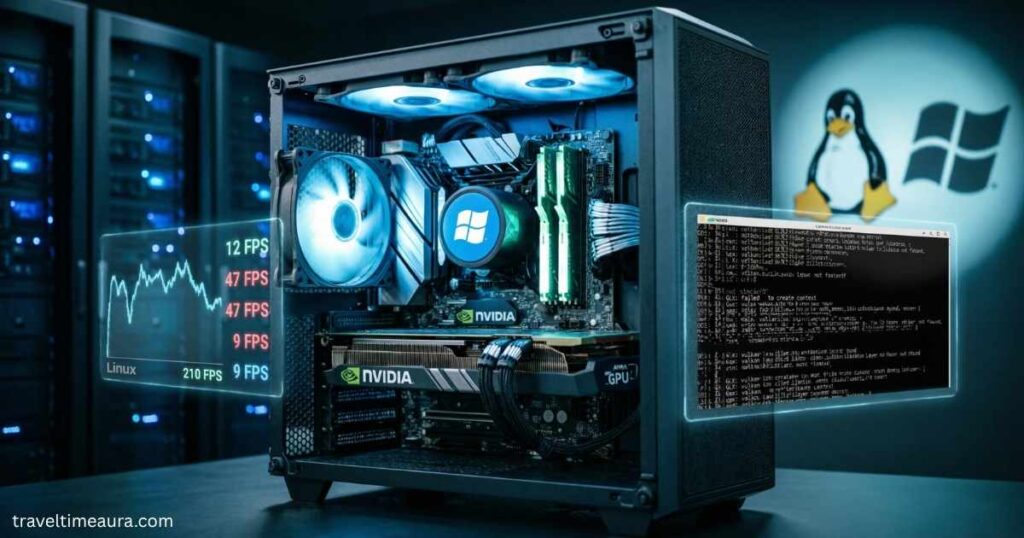
Linux wasn’t built with gaming as its priority. Most games target Windows, so running them on Linux requires the right tools and settings. Without optimization, you’ll hit walls fast — poor Frame Rates, random crashes, and broken audio are all too common.
Every Linux Distribution handles hardware differently. Outdated Graphics Drivers or missing Gaming Libraries can silently kill your performance. Smart optimization bridges that gap and keeps your games running the way they should.
- Low FPS and stuttering caused by unoptimized Shader Compilation during gameplay
- Black Screen Errors appearing right at launch due to wrong Proton settings
- Audio is cutting out completely because of missing or misconfigured Gaming Libraries
- Controllers going undetected mid-session when udev rules aren’t properly configured
- Severe Input Lag in online matches from poor Network Optimization settings
- Random game crashes triggered by incompatible or outdated Graphics Drivers
| Problem | Cause | Quick Fix |
| Low FPS | Unoptimized CPU/GPU settings | Enable GameMode |
| Black Screen | Incorrect Proton version | Switch to Proton GE |
| No Audio | Missing Gaming Libraries | Install audio codecs |
| Stuttering | Shader Compilation delay | Pre-warm shader cache |
| Controller Not Detected | Missing udev rules | Apply community fix |
| Input Lag | Poor network or CPU load | Use Ethernet and GameMode |
Proton and Steam Play
Valve built Proton directly into Steam to solve one big problem — most games only run on Windows. With Steam Play enabled, your entire Windows game library becomes accessible on Linux without a dual-boot setup or virtual machine.
Not every game works perfectly out of the box, though. Switching between Proton versions often fixes stubborn Launch Errors, Frame Timing issues, and crashes. Always check ProtonDB first — the community leaves incredibly useful compatibility notes for thousands of titles.
- Proton Stable works reliably for the most popular mainstream Steam titles
- Proton Experimental delivers cutting-edge fixes for newly released games
- Proton GE is community-built and handles tricky or older titles best
- ProtonDB shows real user reports and Community Fixes for specific games
- PROTON_USE_WINED3D=1 helps when a game struggles with default DXVK rendering
Wine and Lutris
Wine lets you run Windows applications and games on Linux without needing Windows itself. It’s not perfect for every title, but it’s been a reliable foundation for Linux Gaming long before Proton even existed.
Lutris takes Wine further by bundling installers, configurations, and community scripts into one clean interface. You can launch Epic Games, GOG, and Battle.net libraries through Lutris without painful manual setup. It’s honestly one of the smartest tools in any Linux gamer’s arsenal.
- Lutris connects directly with Epic Games, GOG, and Heroic for easy library access
- Pre-built install scripts handle Wine configuration automatically for most games
- You can manage multiple Wine versions without conflicts or system clutter
- Battle.net and Ubisoft Connect both work through Lutris with minimal fuss
- Community-maintained configs mean fewer headaches when a game refuses to launch
Game Mode for Better Performance
Most Linux systems aren’t running at full power by default. GameMode fixes that instantly. It’s a lightweight background tool that kicks in the moment your game launches and pushes your hardware to perform at its peak.
Adding it to Steam is dead simple. Just drop the gamemoderun %command% into your Steam Launch Options, and you’re done. Your CPU shifts into performance mode, Background Interference drops, and your games feel noticeably smoother — all without touching a single config file.
- CPU governor switches from power-saving mode straight into full performance mode
- Process Priority gets raised, so your game always wins the resource battle
- Background apps and services get pushed aside automatically during gameplay
- GPU scheduling improves on supported hardware for better Frame Rates overall
- Pairs seamlessly with MangoHud so you can actually see the performance gains live
You may also like: Droven IO AWS vs Azure Comparison Cloud Analysis Guide for Modern Cloud Computing
Graphics Driver Optimization
Your drivers are the bridge between your game and your GPU. Without the right ones installed, even powerful hardware underperforms badly. Getting this right is one of the fastest wins in your entire Linux gaming setup.
NVIDIA users should always install the proprietary driver for the best results. AMD owners are in luck — the Open-Source Drivers built into the Linux kernel handle Vulkan beautifully. Intel integrated graphics work well, too, with its open-source stack.
| Check the distro repo regularly | Driver Type | Vulkan Support | Recommended? |
| NVIDIA | Proprietary | Yes — strong | Use official repo driver |
| AMD | Open-Source | Excellent — native | Built-in, works out of the box |
| Intel | Open-Source | Good — reliable | Works well for lighter gaming |
| All Brands | Keep Updated | Required for stability | Check distro repo regularly |
Vulkan and DXVK
Linux doesn’t support DirectX natively — and that’s where Vulkan steps in. It’s a modern, low-overhead graphics API that gives your GPU direct, efficient instructions. Most of today’s Linux gaming stack runs on top of it, whether you realize it or not.
DXVK handles the translation layer between DirectX and Vulkan in real time. Games that use DirectX 9, 10, or 11 run through DXVK automatically inside Proton. The results are genuinely impressive — many titles match or even beat their Windows Frame Rates after the switch.
How DXVK and VKD3D-Proton handle DirectX translation:
- DirectX 9 games get translated cleanly into Vulkan through DXVK with strong stability
- DirectX 10 titles follow the same path and typically run without noticeable issues
- DirectX 11 games benefit most from DXVK — performance gains here are often dramatic
- DirectX 12 titles use VKD3D-Proton instead, which handles modern rendering pipelines well
- Enable DXVK_ASYNC=1 in your launch options to reduce Shader Compilation stuttering noticeably
MangoHud for Performance Monitoring
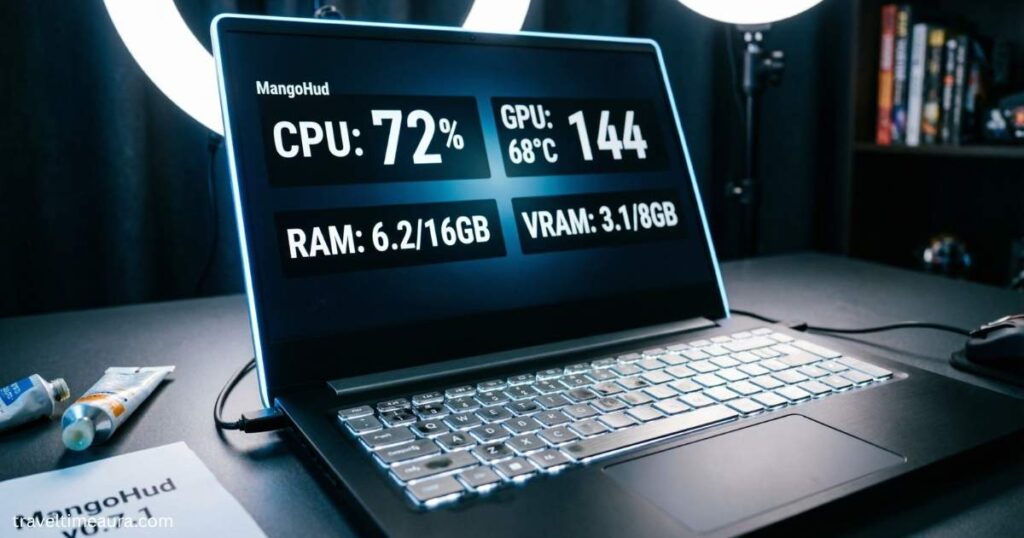
Guessing whether your tweaks actually worked is frustrating. MangoHud removes that guesswork entirely. It’s a clean, lightweight overlay that sits on your screen during gameplay and feeds you live hardware data without slowing anything down.
Enabling it is straightforward. Add MANGOHUD=1 %command% to your Steam Launch Options, and it appears instantly. Pair it with GameMode, and you’ll get a complete picture — you’ll see exactly how your CPU, GPU, and RAM respond to every change you make in real time.
Key metrics MangoHud tracks live:
- FPS and frame graph
- CPU usage per core
- GPU usage and temperatures
- RAM usage in megabytes
- Frame Timing and Latency
CPU and RAM Optimization
Your CPU and RAM work together to keep games running smoothly. Heavy Background Applications steal resources your game desperately needs. Closing browsers, update managers, and cloud sync tools before launching gives your system real breathing room and noticeably steadier Frame Rates.
Your Desktop Environment matters more than most people realize. GNOME looks great, but eats RAM quietly. Switching to a Lightweight Desktop Environment like XFCE or LXQt can free up hundreds of megabytes instantly. For memory-hungry Modern Games, that extra headroom makes a genuine.
- Close every Background Application before your gaming session starts
- Disable heavy animations and visual effects in your Desktop Environment settings
- Switch to XFCE or LXQt to reclaim significant System Resources immediately
- Monitor live RAM Usage through MangoHud while gaming to spot bottlenecks
- Disable unnecessary startup services that quietly consume CPU cycles in the background
Storage and Loading Speed
Where your game lives matters as much as how powerful your system is. An SSD loads game assets dramatically faster than a traditional Hard Drive. If you’re still loading games from an old spinning drive, you’re leaving serious performance on the table every single session.
Shader Cache also plays a big role in loading speed. Linux builds shader caches the first time a game runs. Storing these caches on an SSD means faster access every time you launch. It also reduces that infamous first-session stuttering that catches so many Linux gamers off guard.
- Install your most-played games directly onto an SSD for instant improvement
- Store Shader Cache on SSD to cut first-launch Stuttering significantly
- Avoid running games from slow external or mechanical Hard Drives when possible
- Keep your SSD reasonably free — over 80% full slows read speeds noticeably
- Use Steam’s storage manager to move games between drives without reinstalling anything
Launch Options and Game Tweaks
Steam Launch Options are small but powerful commands. You add them directly to a game’s properties, and they change how that game starts up. They can activate GameMode, enable MangoHud, or force specific rendering flags that fix stubborn performance issues instantly.
Always add one option at a time and test carefully. Stacking too many commands at once can cause conflicts that actually hurt your FPS. Use MangoHud alongside each tweak so you can see exactly whether your Frame Timing and GPU Usage improved or got worse.
- gamemoderun %command% activates GameMode instantly
- MANGOHUD=1 %command% enables live monitoring
- PROTON_USE_WINED3D=1 switches the default renderer
- DXVK_ASYNC=1 reduces shader compilation stutter
- Combine options carefully to avoid conflicts
Network Optimization for Online Games
Online gaming on Linux adds another layer of challenge. A weak or unstable connection creates Input Lag, rubber-banding, and disconnections that no amount of CPU tweaking will ever fix. Your network setup deserves just as much attention as your graphics drivers do.
A wired Ethernet Connection beats Wi-Fi every single time for gaming. It’s more stable, lower latency, and far more consistent under load. If you can’t go wired, prioritize your gaming device using QoS settings on your router to reduce competition from other devices on the network.
- Switch to a wired Ethernet Connection immediately
- Set QoS settings on your router
- Close bandwidth-heavy background applications always
- Test latency regularly with ping commands
- Prioritize gaming traffic over other devices
Common Problems and Solutions
Linux gaming throws curveballs even at experienced users. Black Screen Errors, missing audio, and undetected controllers can all appear without warning. The good news is that most of these problems have well-documented fixes backed by a genuinely helpful community.
Don’t panic when something breaks. Check ProtonDB first for game-specific solutions. Try switching Proton versions before anything else. Most Launch Errors have simple causes — a wrong setting, a missing library, or an outdated Graphics Driver hiding in the background.
| Problem | Likely Cause | Quick Fix |
| Black Screen on Launch | Wrong Proton version selected | Switch to Proton GE immediately |
| No Audio During Gameplay | Missing or broken Gaming Libraries | Install pipewire or pulseaudio codecs |
| Controller Not Detected | udev rules not configured correctly | Apply community udev fix from ProtonDB |
| Stuttering Mid-Game | Shader Compilation happening in real time | Enable DXVK_ASYNC=1 in launch options |
| Game Refuses to Launch | Outdated Graphics Drivers installed | Update via your distro’s driver repository |
Benefits of Tech Hacks PBLinuxGaming
The performance gains from Tech Hacks PBLinuxGaming are immediate and real. Higher FPS, smoother Frame Rates, and faster load times transform Linux Gaming from a frustrating experiment into something you actually enjoy. These aren’t minor tweaks — they make a genuinely noticeable difference every session.
Beyond performance, Tech Hacks PBLinuxGaming hands you real control. You choose your Linux Distribution, your Desktop Environment, and every tool in your stack. That freedom is something Windows simply doesn’t offer. Your Gaming Setup becomes truly yours — built around your hardware and your preferences.
- Dramatically better Frame Rates and stable, consistent Gameplay Performance daily
- Stronger Gaming Compatibility with Windows titles through Proton and DXVK
- Full ownership of your System Resources, drivers, and configuration choices
- A rewarding Open-Source Operating System experience with no forced updates
- Confidence to diagnose and fix common issues without relying on anyone else
You may also like: Xendit GamificationSummit Work: Complete Guide and Insights
Frequently Asked Questions
How Do Tech Hacks PBLinuxGaming Actually Improve FPS?
They optimize CPU priority, reduce background load, and configure drivers correctly. Together, these changes push your hardware harder during gameplay. Results show up immediately in MangoHud.
Which Proton Version Do Tech Hacks PBLinuxGaming Recommend First?
Start with Proton GE for most titles. It handles tricky games better than the stable release. Check ProtonDB for game-specific version recommendations.
Do Tech Hacks PBLinuxGaming Work on All Linux Distributions?
Most hacks apply across major distros without issues. Some driver steps vary slightly between Ubuntu, Fedora, and Arch. Always check your distro’s specific package manager commands.
Can Tech Hacks PBLinuxGaming Fix Stuttering Completely?
Stuttering drops significantly after enabling DXVK_ASYNC and GameMode together. Shader compilation stutter fades after the first game session. Persistent stuttering usually points to a driver issue.
Are Tech Hacks PBLinuxGaming Suitable for Beginner Linux Users?
Absolutely — most steps involve simple terminal commands or Steam settings. Nothing requires advanced coding knowledge or risky system modifications. Follow one step at a time, and you’ll be fine.
How Do Tech Hacks PBLinuxGaming Handle Non-Steam Games?
Lutris and Heroic cover Epic Games, GOG, and Battle.net libraries cleanly. Wine handles standalone Windows executables outside any launcher. Both tools have active communities sharing working configurations.
Do Tech Hacks PBLinuxGaming Require Expensive Hardware to Work?
No — these optimizations work on mid-range and budget hardware too. GameMode and driver tweaks help older GPUs perform noticeably better. You don’t need a high-end rig to see real gains.
How Often Should You Apply Tech Hacks PBLinuxGaming After System Updates?
Check your driver version after every major system update. Proton settings stay saved inside Steam automatically. Revisit launch options only if a game starts behaving differently post-update.
Can Tech Hacks PBLinuxGaming Help With Online Gaming Performance?
Yes — switching to Ethernet and configuring QoS settings reduces Input Lag noticeably. Combined with GameMode, online sessions feel far more responsive. Network optimization is just as critical as GPU tuning.
Do Tech Hacks PBLinuxGaming Work With AMD and NVIDIA GPUs Equally?
Both GPU brands benefit strongly from these optimizations. AMD open-source drivers handle Vulkan exceptionally well out of the box. NVIDIA users get the best results by installing the proprietary driver first.
Conclusion
Tech Hacks PBLinuxGaming isn’t just a collection of tips — it’s a smarter way to game on Linux. From Proton and GameMode to DXVK and MangoHud, every hack covered here solves a real problem. The pblinuxgaming community keeps pushing boundaries, too. And when hondingo88 patches drop, things get even better. Start small, apply one tweak at a time, and watch your performance climb steadily.
The beauty of Tech Hacks PBLinuxGaming is that it grows with you. Beginners see instant wins from simple driver updates and launch options. Experienced users dig deeper into Vulkan, RAM optimization, and network tuning. Linux gaming isn’t a compromise anymore — it’s a genuinely powerful choice. Take these hacks, apply them confidently, and enjoy every session the way it was meant to be played.