Many travellers reach Dharmasthala after exhausting overnight journeys and still miss the early darshan rush. Searching for accurate Dharmasthala Temple Timings becomes stressful when websites show conflicting schedules and outdated information. You probably don’t want long queues ruining a peaceful spiritual visit. A small timing mistake can easily turn an exciting pilgrimage into a frustrating and tiring experience for visitors.
This guide explains Dharmasthala Temple Timings clearly, including darshan hours, puja schedules, and annadana meal services. You’ll also learn the best visiting hours for quieter crowds and smoother temple entry. Helpful travel tips, dress code rules, and nearby stay options are covered simply. By the end, planning your temple visit should feel easier, calmer, and more organised for your family
Dharmasthala Temple Timings
Many devotees check the Dharmasthala Temple Timings before planning their journey because the temple routines follow a strict daily schedule. Early morning hours usually attract spiritual visitors seeking peaceful darshan and shorter waiting lines. Evening sessions become busier as pilgrims arrive from nearby towns and tourist destinations throughout Karnataka during weekends and festival seasons regularly.
Understanding Dharmasthala Temple Timings helps you avoid unnecessary waiting and confusion during your pilgrimage visit. Temple activities include darshan sessions, poojas, annadana services, and special rituals throughout the entire day. Most visitors prefer arriving early because the atmosphere feels calmer and more organised before larger crowds gather near the main sanctum during mornings.
| Visit Type | Opening Time | Closing Time |
| Morning Darshan | 6:30 AM | 2:00 PM |
| Afternoon Break | 2:00 PM | 5:00 PM |
| Evening Darshan | 5:00 PM | 8:30 PM |
| Annadana Service | 11:00 AM | 3:00 PM |
| Temple Access | Open Daily | No Weekly Holiday |
The temple remains open throughout the week, making travel planning easier for families and pilgrims arriving from distant locations. During the afternoon break, devotees usually explore nearby attractions or rest before evening darshan begins again. Arriving slightly earlier than peak hours often helps you enjoy a smoother and more peaceful spiritual experience inside the temple complex.
Dharmasthala Temple Daily Puja Schedule
The daily puja schedule at Dharmasthala Temple begins early morning with sacred rituals and peaceful chanting inside the temple sanctum. Devotees gather before sunrise to attend Nirmalya Darshana and Usha Puja with deep devotion. Morning prayers usually feel calmer, allowing visitors to experience the temple’s spiritual atmosphere without heavy crowd movement during weekdays and regular days.
Throughout the day, priests perform several rituals, including Maha Puja, Rajbhoga Naivedya, and evening Dhupa Puja for devotees visiting the temple. Each ceremony follows traditional Agama Shastra practices maintained carefully for generations at Dharmasthala. Many pilgrims plan their darshan around these poojas because the rituals create a deeply peaceful and memorable spiritual experience for families and first-time visitors alike.
Morning Pujas
Morning pujas at the temple start early and follow a peaceful spiritual routine. Devotees gather before sunrise to witness sacred rituals that create a calm and devotional atmosphere inside the temple.
- Nirmalya Darshana – 6:30 AM
- Abhisheka (Sacred Bath) – 7:00 AM
- Usha Puja – 8:00 AM
- Maha Puja – 10:00 AM
- Rajbhoga Naivedya – 12:30 PM
Evening Pujas
Evening rituals at the temple bring a peaceful close to the day. The atmosphere becomes calm and devotional as lamps are lit and prayers are offered to the deity.
- Dhupa Puja – 7:30 PM
- Deepa Seva – 8:00 PM
- Evening Darshan – 8:30 PM
- Ratri Puja – 9:00 PM
- Ekanta Seva – 10:30 PM
Best Time to Visit Dharmasthala Temple
The best time to visit the Dharmasthala Temple is usually during the cooler months and early morning hours when crowds are lighter. Many pilgrims prefer the winter season for travel for a more comfortable and peaceful darshan experience.
The interpretation may vary depending on the situation. Some visitors prioritise spiritual calm, while others focus on festival energy and temple events.
- October to February offers pleasant weather for travel and darshan
- Early morning hours provide shorter queues and peaceful surroundings
- Weekdays are less crowded compared to weekends and holidays
- Festival seasons like Maha Shivaratri feel spiritually vibrant but very crowded
- Monsoon months may cause travel delays, but offer a lush, scenic experience
Dharmasthala Temple Timings During Festivals
Festivals at the temple feel completely different from normal days. The energy rises, the crowds grow, and every corner of the temple becomes more vibrant. During this time, Dharmasthala Temple Timings shift slightly to manage the heavy flow of devotees smoothly.
In simple words, visiting during festivals is like stepping into a moving wave of devotion. You get more rituals, more decorations, and a stronger spiritual atmosphere. However, it also means longer queues and more waiting time if you don’t plan properly.
Maha Shivaratri Special Timings
During Maha Shivaratri, the temple stays active almost the entire day with extended Dharmasthala Temple Timings. Special pujas like Abhisheka and Ratri Puja happen with increased devotion. Expect longer queues, but also a deeply powerful spiritual experience.
Laksha Deepotsava Festival Hours
This festival transforms the temple into a glowing sea of lamps. Evening Dharmasthala Temple Timings are extended for lighting ceremonies. Visitors often describe it as walking through a “river of light” filled with chants and devotion.
Weekend Festival Crowds and Darshan Flow
On festival weekends, darshan timing management becomes more structured. Entry may be slower, but organised queues help control crowd movement. It’s ideal to arrive early in the morning for smoother access and shorter waiting time.
Annadana and Prasadam Timing Changes
Festival days also see expanded Annadana service. Meal distribution timings may run longer than usual to serve larger crowds. It’s one of the most appreciated parts of the temple experience during busy periods.
Free Annadana (Prasadam) Timings
The free meal service at the temple is one of the most loved parts of the visit. Devotees receive simple, fresh food served with care and devotion throughout the day without any payment.
This Annadana system runs smoothly and follows fixed meal hours for everyone. It reflects the temple’s spirit of sharing and hospitality, where no visitor leaves hungry after darshan or rituals.
| Meal Type | Serving Time |
| Morning Meal | 8:00 AM – 10:00 AM |
| Midday Lunch | 11:00 AM – 2:00 PM |
| Evening Dinner | 7:30 PM – 9:00 PM |
| Special Festival Service | Extended Hours During Events |
Thousands of pilgrims enjoy these meals daily inside large dining halls. The food is prepared in a clean environment and served in an organised way, making the experience peaceful and memorable for every visitor.
Dharmasthala Temple Dress Code and Entry Rules
The Dharmasthala Temple dress code and entry rules are designed to maintain discipline, respect, and spiritual purity inside the sacred space. Every devotee is expected to follow traditional attire guidelines before entering the main temple premises.
These rules reflect long-standing customs followed at the Dharmasthala Temple in Karnataka. They help preserve the sanctity of rituals, ensure smooth crowd management, and create a calm spiritual environment for all visitors.
The interpretation may vary depending on the situation. Some rules are strictly enforced at the inner sanctum, while outer areas may allow more flexibility.
- Men are expected to wear a dhoti or traditional lower garments with a simple upper cloth. Western outfits like shirts and pants are usually not allowed inside the main darshan area.
- Women are encouraged to wear a saree, salwar kameez, or other modest traditional clothing. Short dresses, sleeveless tops, and revealing outfits are discouraged for temple entry.
- Footwear must be removed before entering the temple complex. This rule is strictly followed to maintain cleanliness and respect for the sacred environment.
- Photography and mobile recording inside the main shrine are not permitted. This helps maintain focus on worship and avoids disturbance during rituals and the Dharmasthala Temple darshan timings.
- Entry rules are generally uniform, but during peak pilgrimage seasons, staff may guide devotees more strictly for crowd control and smooth movement inside the temple premises.
Entry Fee and Tickets

There is no entry fee for visiting the Dharmasthala Temple, and devotees can have darshan without any payment. The temple follows an open system where everyone is welcome, regardless of background or status. This makes the pilgrimage simple, accessible, and spiritually inclusive for all visitors.
Some special services like sevas or guided rituals may require booking at designated counters. Dharmasthala Temple Timings for ticket counters usually match darshan hours, helping devotees plan easily. It is always better to arrive early during peak seasons to avoid waiting and secure preferred puja slots smoothly.
How to Reach Dharmasthala Temple
Reaching Dharmasthala is a calm journey through green Karnataka roads, well connected from Mangalore, Udupi, and Bangalore by bus, train, or air, turning peaceful as you approach the temple.
By Road – Most Convenient Option
Road travel is the most popular way to reach the Dharmasthala Temple with KSRTC and private buses from Mangalore and Bangalore. The 75 km scenic drive takes 2 to 3 hours through forests, ending close to the temple entrance easily.
By Train – Nearest Railway Connectivity
Mangalore is the nearest railway station with good connections to major cities. From there, buses and taxis easily reach Dharmasthala. It’s comfortable for long travel, but last-mile transport needs planning since no direct railway station exists nearby.
By Air – Fastest Travel Option
Mangalore International Airport, about 85 km from Dharmasthala, connects major cities like Bangalore, Mumbai, and Chennai. Taxis and buses from the airport offer a smooth journey for pilgrims seeking quick and comfortable travel without long road routes.
4. Local Transport and Final Stretch
Local buses, shared taxis, and auto-rickshaws easily connect nearby towns to Dharmasthala. The final stretch feels exciting as pilgrims appear, signboards increase, and devotional sounds grow, signalling you are close to the peaceful Dharmasthala Temple.
Where to Stay Near Dharmasthala Temple
Finding a place to stay near the Dharmasthala Temple is easy for pilgrims because the area offers both free and paid accommodation options. Many visitors prefer staying close to the temple for a peaceful and convenient darshan experience.
The temple trust also supports devotees with simple and clean lodging facilities. These stays are designed mainly for pilgrims, so comfort is basic but sufficient for short visits and spiritual journeys.
| Accommodation | Type | Distance |
| Temple Choultry | Free Pilgrim Stay | 0.2 km |
| Budget Lodges Nearby | Low-Cost Stay | 1 km – 2 km |
| Local Hotels | Standard Rooms | 1.5 km – 3 km |
| Guest Houses | Mid-Range Stay | 2 km – 5 km |
| Nearby Resorts | Nature Stay Option | 15 km – 25 km |
Many pilgrims choose the temple choultry because it is very close and affordable. During peak seasons, rooms get filled quickly, so early arrival or prior inquiry helps secure a comfortable stay without stress.
You may also like: Kashi Vishwanath Temple VIP Ticket Price 2026
Things to Do Around Dharmasthala
A visit to Dharmasthala Temple is not only about darshan. The surrounding area offers peaceful nature spots, cultural attractions, and spiritual places that make your journey more meaningful and complete.
This region in Karnataka is rich in heritage and natural beauty. Many pilgrims extend their stay to explore nearby temples, museums, and riverside spots after completing their main darshan.
The interpretation may vary depending on the situation. Some visitors focus only on temple worship, while others enjoy sightseeing and local exploration.
- Manjusha Museum – This museum showcases rare collections like vintage cars, ancient artefacts, and historical items linked to the region’s cultural heritage. It offers a quiet and informative experience for visitors who enjoy history.
- Bahubali Statue (Ratnagiri Hills) – Located a short distance away, this tall Jain statue stands in a peaceful hill setting. The view is calming, but the climb can feel tiring for older visitors.
- Nethravathi River View – A serene river spot near the temple where pilgrims often relax after darshan. It is ideal for short walks, though it may feel crowded during festival seasons.
- Nearby Pilgrimage Temples – Places like Kukke Subramanya Temple attract many devotees planning a combined pilgrimage trip. Travel between sites is simple, but time management is important for same-day visits.
- Local Nature and Village Experience – The green surroundings, small villages, and scenic roads offer a peaceful driving experience. However, limited commercial facilities may require basic planning for food and travel comfort.
Dharmasthala Temple Timings – Important Tips for Visitors
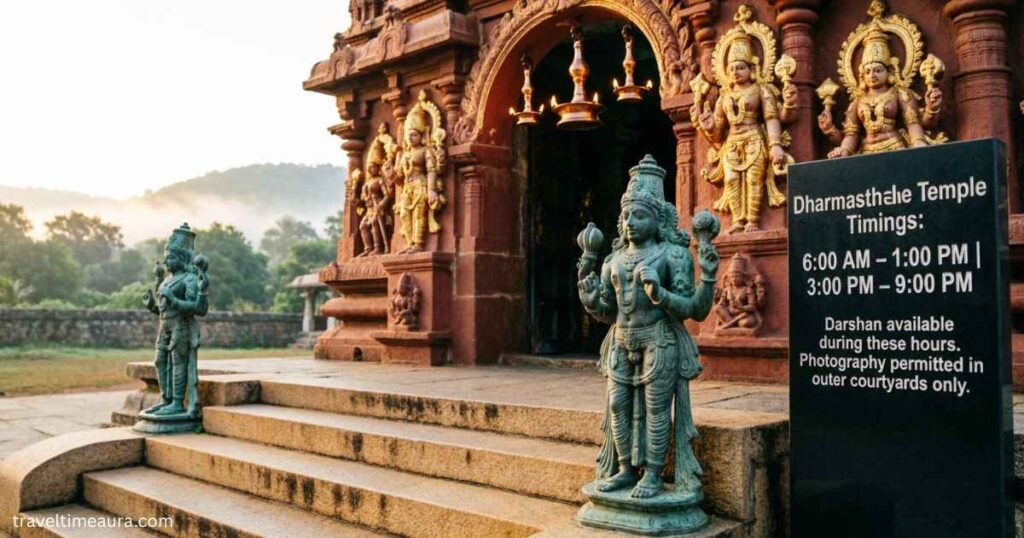
Understanding Dharmasthala Temple Timings helps you plan a smooth and peaceful visit without confusion. A little preparation saves time and makes your darshan experience more comfortable and spiritually fulfilling during your trip.
- Arrive early morning for faster darshan and shorter queues
- Avoid weekends if you prefer a less crowded and quieter atmosphere
- Check the updated temple schedule before starting your journey
- Follow the Dharmasthala Temple dress code strictly for easy entry
- Keep mobile use to a minimum inside temple premises for respect
- Plan a visit around Annadana timings to enjoy free meals
- Carry essentials only to avoid delays at security checkpoints
Frequently Asked Questions
When should I visit to avoid crowds at the Dharmasthala Temple Timings?
Early mornings are best for peaceful darshan with fewer devotees and shorter waiting lines inside temple premises. Weekdays feel calmer compared to weekends.
Are there different timings for morning and evening darshan in the Dharmasthala Temple Timings?
Yes, morning and evening darshan follow separate schedules with a break in the afternoon hours for temple rituals and maintenance activities.
Do Dharmasthala Temple Timings change during festivals?
Yes, festival days often have extended hours and heavier crowds. Planning early helps you experience smoother entry and better darshan flow.
Is the temple open every day according to the Dharmasthala Temple Timings?
The temple remains open throughout the week without holidays. Devotees can visit any day based on their travel convenience and planning.
Can I attend annadana during the Dharmasthala Temple Timings?
Yes, free meal service is available daily during fixed hours. Visitors can enjoy simple food served with devotion and proper organisation.
Conclusion
Understanding Dharmasthala Temple Timings helps you plan your visit in a calm and organised way. When you know the schedule, you can avoid rush hours and enjoy smoother darshan. Proper timing also helps you experience rituals, annadana, and peaceful temple moments without stress.
Planning around the Dharmasthala Temple Timings also improves your overall pilgrimage experience. You arrive at the right hours, reduce waiting time, and feel more connected to the spiritual atmosphere. A little awareness goes a long way in making your temple visit simple, meaningful, and memorable.